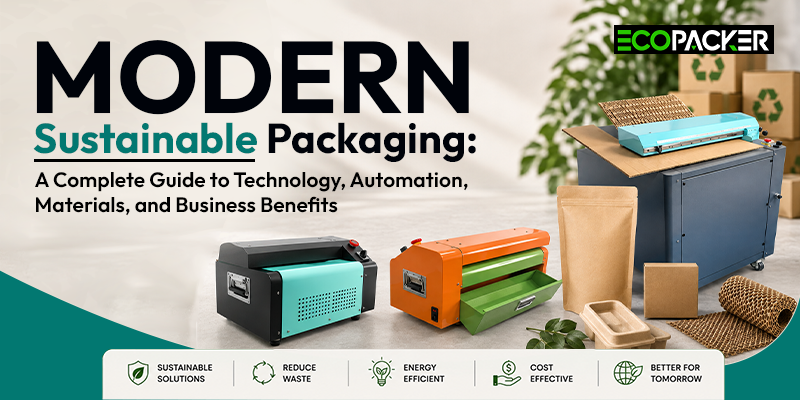
Sustainable Packaging is no longer an option but a requirement in various industries such as the food industry, cosmetic industry, pharma industry, and the e-commerce sector. With the increasing consumer awareness regarding the environment, businesses are turning to sustainable material and advanced machinery that produces sustainable packaging without hindering productivity. This comprehensive guide highlights the transformation in the manufacturing industry due to sustainable packaging technology, why using the appropriate sustainable packaging machine is important, and how businesses can leverage these changes. No matter if you are an industry owner, a retailer, or a startup owner, learning about these changes will help you make better decisions. This guide covers everything one needs to know about building a better packaging strategy with sustainable packaging technology.
Why the Shift Toward Eco-Friendly Packaging Matters
Because of the increase in the number of environmental problems caused by regulatory requirements and customer demands for environmentally-friendly products, there is a change in the paradigm of packaging and transportation of the goods of those firms. All of the above-mentioned companies are forced by the customers and governmental agencies to reduce their waste generation. But even small companies have to show their concern for the environment. Why should you be concerned about it? Because:
- Reduces landfill waste and ocean plastic pollution
- Meets tightening government rules on single-use plastics
- Builds brand trust and loyalty among eco-conscious buyers
- Lowers long-term material sourcing and disposal costs
- Attracts investors focused on ESG (Environmental, Social, Governance) goals
Companies that ignore this shift risk falling behind competitors who have already adopted sustainable packaging solutions to meet changing market expectations and buyer preferences.
Understanding the Technology Behind Greener Packaging
Innovation is very important in modern manufacturing in order to make packaging both practical and environmentally friendly. Innovations have penetrated all stages of packaging production, starting from the arrival of raw materials at the factory to the final packaged product exiting the warehouse. The most important innovations include:
- Biodegradable and compostable film production systems
- AI-driven quality control that reduces raw material waste
- Smart sensors that optimize packaging thickness and strength
- Energy-efficient production lines that cut carbon emissions
- Digital printing methods that reduce ink and chemical usage
These innovations prove that sustainable packaging technology is not only about swapping materials it is about rethinking entire production systems for efficiency and long-term environmental responsibility.
The Role of Automation and Machinery
Automation is vital for mass-producing products sustainably in factories of all sizes. A good automated machine for eco-packaging can greatly reduce waste materials and boost production time. Advantages of automation include:
- Precise material dosing that minimizes excess packaging
- Faster production cycles with lower energy consumption
- Reduced manual labor and fewer human errors
- Easy compatibility with recyclable and biodegradable inputs
- Simple integration with existing production lines
The use of reliable sustainable packaging equipment not only guarantees consistency in production quality but also helps meet future environmental aspirations. Some firms are increasingly opting to revamp their assembly plants by introducing a sustainable packaging machine for all products that are sustainable in nature. This enables the firm to undertake both conventional and sustainable packaging activities without necessarily using the same machine. Such machines can be used in educating employees on how to handle recyclable and biodegradable materials because they react differently to other conventional plastics in the assembly line. It is likely to result in reduced downtime in the long-run due to familiarity with individual material settings.
Choosing the Right Materials
While machines and technology matter, the real foundation of eco-friendly packaging still lies in material choice. Common sustainable packaging materials being adopted across industries include:
- Recycled cardboard and paperboard
- Biodegradable plant-based plastics such as PLA
- Mushroom-based and mycelium packaging
- Compostable films made from cornstarch
- Reusable glass and metal containers
It will always be dependent on the nature of the product, its shelf life, and the transportation method, meaning that it is essential to consider material choices when formulating any sustainable packaging strategy. Those shipping fragile or perishable products will have to try out a number of materials before deciding on what works best for them.
Business Benefits Worth Considering
Adopting eco-conscious practices isn’t just good for the planet it’s good for business too. Companies that invest in modern equipment and processes for their packaging often see:
- Lower operational costs through consistent waste reduction
- Improved brand reputation and stronger customer loyalty
- Easier compliance with evolving environmental regulations
- Access to new markets that prioritize green certifications
- Higher employee morale tied to purpose-driven work
- Stronger relationships with retailers that enforce green sourcing policies
Those businesses which combine the correct machinery for sustainable packaging along with more intelligent material usage usually have quicker paybacks since any waste reduction means cost savings. This is how those visionary companies stand out from others through their use of intelligent machines and materials in their designs.
Getting Started With a Sustainable Strategy
Transitioning away from conventional packaging doesn’t happen overnight, and most businesses find success by moving in phases rather than all at once. A practical starting point includes:
- Auditing current packaging waste and cost data
- Piloting one product line with eco-friendly alternatives
- Training staff on new equipment and handling procedures
- Partnering with suppliers who share sustainability commitments
- Tracking results and scaling what works best
- Reviewing packaging design regularly as new materials and equipment become available
Such an approach allows minimizing the possible dangers and at the same time gives companies a chance to gain a certain momentum in their development of the eco-consciousness process. Moreover, such an approach gives leaders enough time to understand how much benefit they will receive from such a transition and thus to be able to persuade themselves to invest even larger amounts into the implementation of the project. Usually, many brands that lack their own sustainability departments choose to cooperate with special packaging producers.
In addition, it should be said that consumers’ needs and interests are also changing in the course of time along with industry requirements. Nowadays, consumers want to know if the products they are purchasing are recyclable or not.
Conclusion
The adoption of packaging that is environmentally friendly is made possible by improved technology, automation and the use of materials which are environmentally friendly and at the same time capable of protecting the products. Companies that invest in advance in regard to adopting the correct equipment and the training of their workers on how to operate them as well as the use of the right materials for their products will be better placed in order to comply with the regulatory requirements. Sustainable Packaging is thus a strategy rather than an effort.
Frequently Asked Questions
It refers to packaging designed to reduce environmental impact through recyclable, biodegradable, or reusable materials, along with efficient production methods. It matters because it lowers waste, meets regulations, and builds long-term brand trust.
Automated equipment reduces material waste, speeds up production, and lowers human error, making it easier for manufacturers to scale greener practices without sacrificing efficiency or output quality.
Recycled paperboard, plant-based plastics like PLA, mycelium-based packaging, and compostable cornstarch films are among the most widely used eco-friendly options today.
Initial costs can be higher, but many businesses recover expenses through reduced material waste, lower disposal costs, and stronger customer loyalty over time, making it a worthwhile long-term investment.
Start by auditing current packaging waste, piloting one product line with eco-friendly alternatives, training staff, and gradually scaling successful changes across the rest of the product range.
Eco-Friendly Packaging
Interested in the Eco-Packer Machine?
Fill out our inquiry form and our team will get back to you within 24 hours.
