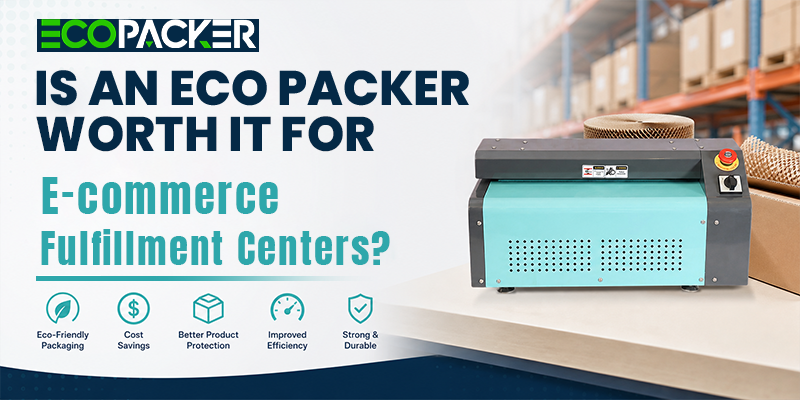
Anyone running a fulfillment center knows the drill boxes go out by the hundreds, sometimes thousands, every single day, and each one needs something inside to stop the product from rattling around and breaking. For the longest time, that “something” was bubble wrap or foam peanuts, bought in bulk and reordered constantly. But as shipping volumes climb and businesses start paying closer attention to both their packaging bill and their environmental footprint, a different kind of machine has been showing up on warehouse floors the EcoPacker. It takes cardboard you’d otherwise throw away and turns it into padding you can actually use. Sounds simple. But does it really make sense for a busy fulfillment operation, or is it one of those things that looks good on paper and falls flat in practice? Let’s dig into it.
What Exactly Is an EcoPacker Machine?
At its core, an EcoPacker sometimes called a cardboard perforator machine is a piece of equipment that takes flat cardboard and runs it through a set of internal blades. Those blades cut a pattern of small slits into the cardboard, and once it comes out the other side, it’s no longer stiff and flat. It stretches. It flexes. It behaves almost like a net, and that’s exactly what makes it good at cushioning products during shipping.
It’s worth mentioning this machine sits in the same general family as a cardboard shredder for packaging both exist for the same reason: take cardboard that would otherwise get tossed out or hauled away, and turn it into something the warehouse can actually use.
How Does It Actually Work?
Nothing complicated here, honestly:
- Used or leftover boxes get flattened and fed into the machine
- Steel blades inside perforate and slit the cardboard in one go
- What comes out is this bouncy, flexible mesh
- Staff wrap it around fragile items or stuff it into gaps inside boxes
- Even the trimmed-off edges can usually be run back through, so almost nothing goes to waste
Some units are small enough to sit on a tabletop, which works fine for smaller operations. Others are bigger, freestanding, and built on wheels for warehouses pushing higher volumes.
Features Worth Paying Attention To
If you’re comparing machines, here’s what actually matters:
- Width and thickness it can handle – decides how big or thick a piece of cardboard you can run through
- Speed – usually measured in feet per minute; matters a lot if you’re shipping high volume
- Build quality – metal housing and solid steel blades hold up much better under daily use
- Footprint – tabletop models save space, freestanding ones need more room but do more
- How easy it is to run – most staff can be trained in minutes, not days
- A waste bin or tray – keeps the area from turning into a mess of cardboard scraps
- Wheels/mobility – lets you move it between packing stations when needed
Is It Actually Worth It?
This is the part everyone really wants to know. And honestly, it depends but for most fulfillment centers doing decent volume, the numbers tend to work in its favor.
Money. Warehouses already generate a mountain of cardboard from inbound shipments and returns. Instead of paying to haul that away and then separately buying bubble wrap, you’re reusing what’s already sitting there. That cuts two costs at once packaging spend and waste disposal.
How it looks to customers. People notice what’s inside their package these days. Cutting down on plastic bubble wrap isn’t just a nice gesture it backs up whatever sustainability claims a brand is already making, instead of just being a line on the website nobody believes.
Workflow. Since the machine sits right at the packing station, nobody’s walking across the warehouse to grab a roll of bubble wrap. Material gets made right when it’s needed, which helps a lot during peak periods think holiday rushes or big sale days.
Where it might not make sense yet. If you’re only shipping a handful of orders a day, you probably won’t generate enough cardboard to make this worthwhile, and the upfront cost needs to match your actual volume. It also takes up some floor space and needs someone to run it, so tight layouts or thin staffing should factor that in before buying.
For centers doing steady, moderate-to-high volume, though, the savings and reduced plastic dependency usually make it worth the investment within a reasonable amount of time.
EcoPacker vs Traditional Packaging – The Real Differences
| Factor | EcoPacker / Cardboard Perforator | Bubble Wrap & Foam |
| Raw material | Cardboard you already have | New plastic/foam, bought repeatedly |
| Ongoing cost | Drops after setup | Keeps climbing with volume |
| Environmental impact | Less plastic, less cardboard waste | Adds to plastic waste |
| Storage | Just needs cardboard supply | Needs space for rolls and stock |
| Production | Made on the spot | Pre-made, needs reordering |
| Disposal | Barely anything left over | Hard to recycle in most areas |
There’s More to It Than Just Cost
Cardboard’s already one of the more recyclable materials out there, but running it through a cardboard recycling packaging machine stretches its life even further before it eventually gets recycled anyway. Compare that to bubble wrap, which most municipal recycling programs won’t even take, and you can see why more warehouses are treating this as a real sustainable bubble wrap alternative rather than just a nice-to-have.
Before You Buy One, Think About This
Worth checking a few things first:
- How many orders you’re shipping daily or weekly
- How much cardboard you’re already generating from incoming stock
- Whether you’ve got the floor space near packing
- Whether someone’s available to run and maintain it
- Any sustainability goals your company’s actually trying to hit
If your warehouse is already drowning in cardboard from supplier deliveries, you’re probably a good fit the raw material’s already sitting there waiting.
Conclusion
When it comes to choosing reliable, eco-friendly packaging equipment, it’s always better to go with a trusted name instead of guessing blindly. For genuine options and a better idea of what suits your business, check out ecopacker.co.in before making your final call.
Frequently Asked Questions
Is an EcoPacker machine difficult to operate?
No, most machines only require setting a cutting guide and feeding cardboard through, making them easy to learn in a short time.
Can EcoPacker material protect fragile items as well as bubble wrap?
Yes, perforated cardboard mesh is flexible enough to cushion fragile products when wrapped correctly around them.
Does using an eco packer machine reduce plastic waste?
Yes, it directly reduces dependence on plastic bubble wrap and foam packing materials.
What size cardboard boxes work best with these machines?
Most standard shipping cartons and flattened boxes work well, as long as they fit within the machine’s width and thickness limits.
Is this equipment only useful for large warehouses?
No, tabletop models are designed for smaller shipping departments, while freestanding units suit higher-volume operations.
Eco-Friendly Packaging
Interested in the Eco-Packer Machine?
Fill out our inquiry form and our team will get back to you within 24 hours.
