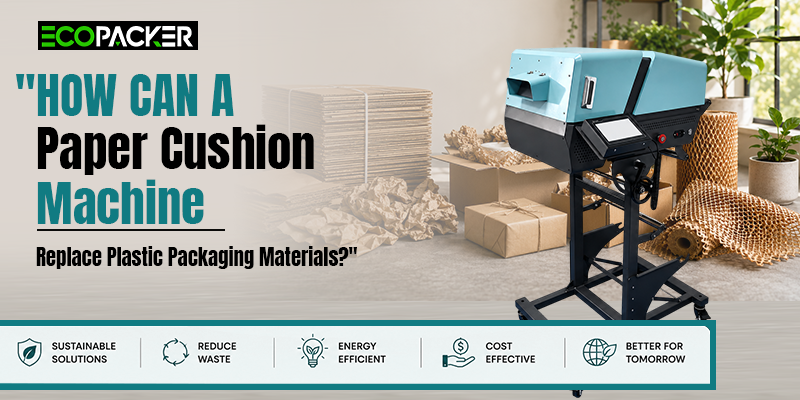
There is a re-evaluation of methods for ensuring product safety during transport across different companies, and the use of plastic bubble wrap is gradually losing its relevance. Growing environmental concerns, increased regulations, and customer expectations of sustainable brands lead many companies to seek more appropriate options. In this case, a Paper Cushion Machine becomes a useful tool. This device turns regular kraft paper into soft and crumpled cushioning, which will perform product protection functions equally well compared to plastic foam or bubble wrap. Moreover, paper cushioning is biodegradable, recyclable, and comes from renewable sources. In the age of Plastic Free Packaging for warehouses and e-commerce, it is rapidly becoming an integral part of contemporary logistics industry.
What Is This Paper Cushioning Equipment and How Does It Work?
But before we can pack using this machinery, it would be good to know what goes on inside it. The machine is a small machine that takes in flat kraft paper, rolls it up, and folds it into loose and soft cushions that serve as void fillers and buffers inside the shipping boxes. It is a very easy and quick process that does not need much technical skill. This is how the machine operates:
- Paper rolls are loaded into the machine and fed automatically.
- Built-in rollers crush and twist the paper into a springy, cushioned texture.
- The output can be cut to custom lengths depending on the size of the box or product.
- Most machines run on standard electricity and require minimal training to operate.
- The finished cushioning is lightweight yet strong enough to absorb shocks during transit.
This simple process eliminates the need for polyethylene foam sheets, plastic air pillows, and bubble wrap rolls that typically end up in landfills.
Why Traditional Plastic Packaging Is Becoming a Problem
Plastic packaging was always used for cushioning because of its cost effectiveness and availability. But with rising awareness regarding the environment, the disadvantages associated with it cannot be ignored anymore, and there are several reasons why plastic is not preferred anymore:
- Plastic foam and bubble wrap take hundreds of years to decompose.
- Many recycling facilities cannot process mixed plastic packaging waste efficiently.
- Government bodies in several countries are introducing bans or taxes on single-use plastics.
- Consumers increasingly prefer brands that show visible commitment to eco-friendly practices.
- Storage and transport of bulky plastic rolls add unnecessary logistics costs.
Industries such as electronic goods, glassware, cosmetics, and home decorations are the worst hit because these industries need to ensure that their products have sufficient padding for protection. On the other hand, there is increasing pressure on them by retailers and consumers to become more environmentally friendly. Any variation in packing material has an impact on the buyer’s decision-making process, especially if the buyer is young and environmentally aware.
How a Paper Cushion Packaging Machine Reduces Plastic Waste
A Paper Cushion Packaging Machine directly addresses the issue of plastic use, providing firms with a solution that enables them to manufacture their own cushioning needs right where packaging takes place. Rather than ordering and storing plastic rolls in bulk, firms can generate exactly what they require. The benefits include:
- It uses recyclable kraft paper instead of non-biodegradable plastic film.
- Paper cushioning can be produced exactly when and where it is needed, cutting down on storage space.
- Since the machine only uses as much paper as required per package, material waste drops significantly.
- The resulting packaging is easy to recycle along with cardboard boxes, so customers do not need to separate materials.
- It supports compliance with growing regulations around single-use plastic reduction.
For companies shipping fragile electronics, glassware, or cosmetics, this shift does not mean compromising on protection. Paper cushioning, when made with the right thickness and density, offers comparable shock absorption to plastic alternatives.
Benefits of Switching to a Sustainable Packaging Machine
A Sustainable Packaging Machine is therefore not only an eco-friendly choice but a business-wise one as well. In addition to decreasing dependency on plastic, there are usually three key areas where businesses find marked improvement when the machine is put into use:
- Lower long-term costs: Kraft paper is generally more affordable than specialty plastic foam, especially when purchased in bulk.
- Improved brand image: Customers notice and appreciate packaging that reflects environmental responsibility.
- Reduced storage needs: Paper rolls take up far less warehouse space compared to pre-formed plastic cushioning.
- Better recyclability: Paper-based packaging can go straight into standard recycling streams.
- Operational flexibility: Businesses can adjust cushioning thickness and volume on the spot, based on order size.
All of these benefits will eventually result in considerable savings and packaging that meets today’s sustainable practices. Another benefit for companies is the fact that employees responsible for packaging are used to this type of equipment due to the fact that it is easier to use than manual cutting and taping of bulk plastic material.
Choosing the Right Machine and Supplier
Each environmental cushioning system is not constructed the same way. Before making any purchases, companies need to evaluate several different aspects that can affect system performance on a daily basis. Speed of production, compatibility with paper, machine size, and after sales service are some of those aspects:
- Check the machine’s output speed against your daily shipping volume.
- Confirm it can handle different kraft paper widths and thicknesses.
- Look for suppliers offering installation guidance and spare parts availability.
- Consider machines that are compact enough to fit into existing packing stations.
- Ask about warranty coverage and long-term maintenance support.
This is where suppliers like Ecopacker play a big part in ensuring that the shift from a plastics-based packing line to one which uses paper is as smooth as possible. When selecting an effective Paper Cushion Machine, one that comes with proper service, one is assured that packing lines will continue operating effectively.
Conclusion
The adoption of alternative packaging material cannot be considered by any organization seeking compliance, affordability, and appeal to the eco-friendly consumers of this generation. A Sustainable Packaging Machine for producing cushioning material from paper constitutes an ideal solution in protecting items through the use of no plastic foam or bubble wrap at all. There are various benefits of such adoption other than meeting environmental requirements, including reduction of waste in landfills and reduction in storage costs, among others. Organizations wishing to implement such changes can seek the services of reliable organizations such as ecopacker, and ecopacker website can assist in selecting the right machinery for packaging purposes.
Frequently Asked Questions
Most machines are designed to work with standard kraft paper rolls, which are widely available, recyclable, and cost-effective compared to plastic film.
Yes, when produced with appropriate thickness and density, paper cushioning offers comparable shock absorption for most fragile and semi-fragile items during shipping.
Many suppliers offer compact, entry-level models suited to smaller shipping volumes, making the switch feasible for businesses of varying sizes and budgets.
Not significantly. Once set up, these machines produce cushioning quickly and can often match or improve the pace of manual plastic packaging methods.
Yes, paper cushioning can typically be recycled along with cardboard, unlike mixed plastic materials that often require separate, specialized recycling processes.
Eco-Friendly Packaging
Interested in the Eco-Packer Machine?
Fill out our inquiry form and our team will get back to you within 24 hours.
