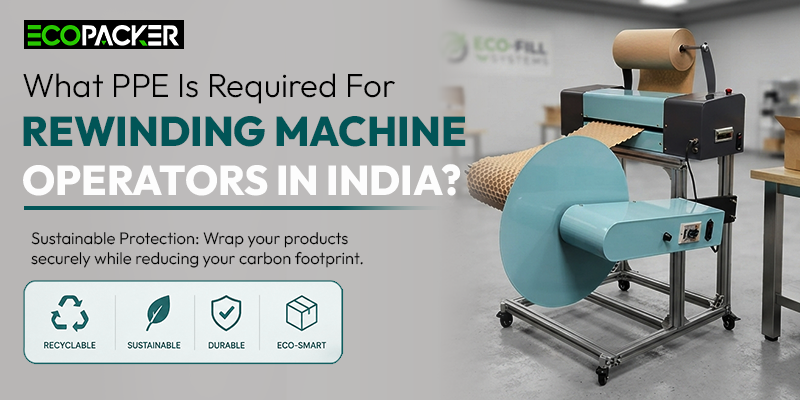
The rewinding machines used in various paper mills and packaging plants in India are utilized in transforming the larger rolls of the material such as paper, film, or tissues into small rolls for commercial sale. Such a task is mechanical and fast. It involves the handling of moving rollers, cutting blades, roll cores, and paper dust, among others. This makes personal protective equipment an absolute necessity when handling a rewinder machine.
A rewinder operator operates a rewinder machine while the process of unwinding, slitting, and rewinding takes place. He is likely to suffer from hand injuries, irritated eyes, hearing damage, and lacerations from the slitting blades. It is therefore mandatory that the factory owners in India according to the Factories Act, 1948 (which has been replaced by the Occupational Safety, Health, and Working Conditions Code, 2020), provide necessary safety equipment and safe working environment for the machine operators including the rewinder operators.
This blog provides information in simple terms about the type of protective equipment required for this job, the importance of each, and how mills can promote the use of these protective measures in rewinding machines. Whether you are a safety officer, a mill supervisor, or even a researcher who is studying the operation of a rewinding machine before purchasing or installation of the same, this blog will help you understand the situation.
Why PPE Matters on a Rewinding Line
The rewinding line seems relatively straightforward on the outside rolls in and rolls out. However, behind all this, quite a number of activities are taking place; rotating shafts, tensioned paper or film webs, slitting knives, hydraulic lifts, hot air dryers, coating systems, or whatever might be connected to the machine. All of these are potential sources of harm if the person operating them does not have the proper protection.
In particular, paper mills produce a considerable amount of dust and fiber close to the rewinding machines, thus affecting one’s breathing. Noise from the motors and gearboxes may also exceed the safe exposure level during shift work. This is the reason why PPE is considered part of the first line of defense along with machine guarding and emergency stop controls.
Key PPE Checklist for Working on a Rewinder Machine
Below are the essential protective items every rewinder operator should use while working on or near the machine.
- Safety helmet or hard hat – This protects the head against any falling roll cores, overhead fixtures or accidental contact with raised machine parts.
- Safety goggles or face shield – This helps protect the eyes from dust that is created while the paper is slit or trimmed.
- Ear plugs or ear muffs – It helps reduce the operator’s exposure to continuous noise created by the machinery, which may lead to hearing impairment.
- Cut resistant hand gloves – This is necessary around the slitting blades and knife holders where fingers may get cut while changing blades or threading web.
- Steel toe safety shoes – Helps protect the feet from falling roll cores, trolleys and any dropped tools, and also provides better traction on the floor covered with paper dust or oil.
- Dust mask or respirator – This filters any paper fibers and dust that might be airborne, especially in old mill installations with fewer closed dust collection units.
- High visibility reflective vest – Helps ensure that the operator is seen by forklift or trolley drivers maneuvering large rolls on the floor.
- Well-fitted work uniform (No loose clothing) – Any loose sleeves, scarves or identification cords might get caught in rotating shafts hence close fitting uniform is necessary.
- Safety belt or harness – Only when the operator is working at a height such as on the elevated platforms of some large rewinding machines.
Not every mill uses every item on this list all the time; the exact combination depends on the size and design of the rewinding machine, the material being processed, and the specific risk assessment done by the mill’s safety team.
PPE Requirements by Task on the Rewinder Machine
Different tasks around a rewinding line carry different risks, so the PPE combination can change slightly depending on what the operator is doing.
- Roll loading and unloading: Steel-toe shoes, gloves, and a hard hat are the priority, since this task involves heavy cores and possible crushing hazards.
- Blade or knife changing: Cut-resistant gloves and eye protection are critical, as this is one of the most common causes of hand injuries on rewinders.
- Machine running and monitoring: Ear protection, dust mask, and goggles matter most here, due to constant noise and airborne fiber.
- Cleaning and maintenance: Full PPE set is required, along with lockout-tagout of the machine before any hands go near moving parts.
- Working near paper mill dust extraction points: Respirators with proper filter ratings are needed to avoid inhaling fine fiber dust over long shifts.
Summary of Differences: PPE by Machine Type and Setting
Different rewinding setups call for slightly different protective priorities. Here’s a quick comparison to make the differences clear.
| Setting | Main Hazard | Priority PPE |
| Small/manual rewinder machine | Manual handling, blade contact | Gloves, goggles, safety shoes |
| Large industrial rewinder machine in paper mills | Noise, dust, heavy rolls, moving shafts | Full PPE set including ear protection and respirator |
| Automated/high-speed rewinding lines | Pinch points, high-speed web breaks | Cut-resistant gloves, face shield, fitted uniform |
| Rewinder machine manufacturers’ test/demo floors | Mixed exposure during trial runs | Standard full PPE plus visitor safety briefing |
This comparison shows that while the core PPE list stays similar, the emphasis shifts depending on machine size, speed, and the working environment. A rewinder operator working on a compact unit in a small packaging unit faces different day-to-day risks compared to one working a large industrial line inside a paper mill.
Role of Training Alongside PPE
Wearing the right gear is only half the safety picture. A rewinder operator also needs proper training on:
- How to safely start, stop, and pause the machine during an emergency
- Correct procedure for threading paper or film through rollers without hand contact with moving parts
- Lockout-tagout steps before clearing jams or changing blades
- Recognizing early signs of machine faults, such as unusual vibration or noise
- Reporting damaged PPE immediately instead of continuing to use it
Mills that combine PPE with regular training sessions tend to see far fewer accidents than those that rely on protective gear alone. PPE reduces the severity of an incident; training helps prevent the incident from happening in the first place.
Responsibilities of Rewinder Machine Manufacturers and Mill Owners
The responsibility of safety in the rewinding line lies jointly with many stakeholders. The manufacturers of rewinding machines should be producing such machinery with all the necessary protective equipment such as emergency stops, protective guarding and operating manual which include recommendations for the required personal protective equipment for various operating areas within the machine. It is the responsibility of the mill owner or supervisor to ensure that the required personal protective equipment is supplied and well maintained and used by the operators at all times.
As per the Factory Safety Act of India, it is the responsibility of the employers to provide free of cost the protective equipment to the workers who perform operations in hazardous process areas.
Common Mistakes Mills Make with PPE
Even well-intentioned mills sometimes fall short in a few common ways:
- Issuing PPE once and not replacing it when it wears out or gets damaged
- Allowing operators to remove gloves near blades because they feel gloves reduce grip (a cut-resistant, properly fitted glove solves this instead of removing it)
- Not adjusting ear protection levels for very high-noise machines
- Skipping dust masks during short tasks, even though short repeated exposure adds up over time
- Failing to train new or temporary workers before they are placed near a running rewinder
Addressing these gaps usually costs far less than dealing with the aftermath of a workplace injury, both in human and financial terms.
Conclusion
Working as a rewinder operator means working close to moving parts, sharp blades, heavy rolls, and constant machine noise, day after day. The right combination of helmet, eye protection, ear protection, gloves, safety shoes, dust protection, and fitted clothing is what stands between routine work and a serious injury. Paper mills and converting units that treat PPE as a daily habit, not a formality, tend to run safer, more productive rewinding lines. Combined with proper training and machine guarding from responsible manufacturers, PPE forms the foundation of a safe rewinding operation across India’s paper and packaging industry.
If you’re looking to set up or upgrade a rewinding line with safety-first machine design, it helps to work with manufacturers who understand these operational risks firsthand. You can explore well-engineered rewinding and packaging machine options at Ecopacker to find equipment built with operator safety in mind.
Frequently Asked Questions
1. What is the most important PPE item for a rewinder operator?
Cut-resistant gloves are often considered the most important item, since hand injuries near slitting blades are among the most common accidents on rewinding lines. However, PPE works as a complete set goggles, ear protection, and safety shoes are equally necessary for full protection during daily operation of a rewinding machine.
2. Is PPE legally required for rewinder machine operators in India?
Yes. Under Indian factory safety law, employers must supply protective equipment free of cost to workers exposed to machine-related hazards. This applies to machine operators on rewinding lines in paper mills and converting units, where moving parts, noise, and dust are regular parts of the job.
3. Do small rewinding units need the same PPE as large paper mills?
The core PPE list is similar, but the emphasis differs. Large paper mill rewinders involve more noise and dust, so ear protection and respirators matter more there, while smaller units may focus more on gloves and eye protection for manual handling and blade work.
4. How often should PPE be replaced on a rewinding line?
There is no single fixed timeline, since it depends on usage and wear. Gloves, masks, and ear plugs should be replaced as soon as they show damage or reduced effectiveness, while helmets and shoes are typically checked during routine safety inspections and replaced when cracked or worn out.
5. Can proper machine design reduce the need for PPE?
Good machine guarding, sensors, and emergency stops from responsible rewinder machine manufacturers reduce risk, but they do not remove the need for PPE. Even well-guarded machines have exposed points during threading, blade changes, and maintenance, so PPE remains necessary alongside good machine design.
Eco-Friendly Packaging
Interested in the Eco-Packer Machine?
Fill out our inquiry form and our team will get back to you within 24 hours.
