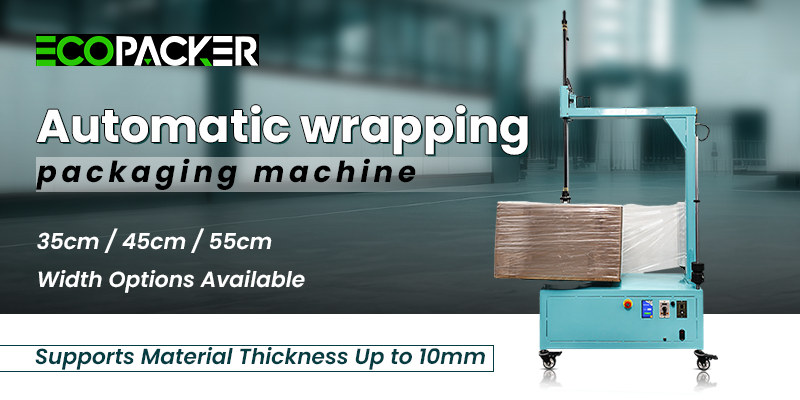
In modern day manufacturing, warehousing, and logistics operations, effective packaging assumes great significance as it helps in ensuring safe packaging of goods and enhancing process efficiencies. The Automatic Wrapping Machine is one of the latest innovations in terms of packaging machines that are capable of wrapping products or loaded pallets with precision and high efficiency. The usage of automatic wrapping machines helps businesses in cutting down labor expenses, enhancing the stability of the load, reducing wastage of packaging material, and keeping goods secure during transportation and storage.
What Is an Automatic Wrapping Machine?
An Automatic Wrapping Machine is an automatic packaging machine that uses stretch film, shrink film, or other wrapping material to wrap products or loads of products without any manual operation at all times.
These wrapping machines have several applications in manufacturing industries, pharmaceuticals, food packaging industries, e-commerce, logistics, consumer goods, and warehousing, among others. The main function of the machines is to wrap products in order to protect them from external influences such as moisture and dust.
This type of machine eliminates problems associated with poor wrapping quality that is often associated with manual wrapping processes.
How Does an Automatic Wrapping Machine Work?
The working process will depend on the particular machine used as well as the purpose, although most machines use more or less similar processes.
First, the product or pallet load is loaded on the machine’s platform or conveyer belt. The sensors measure the exact dimensions and positioning of the load. As soon as the wrapping cycle starts, a film carriage releases the wrapping film while revolving around the product or revolving the product itself.
The machine wraps the products by using appropriate tensions to create effective encasement. Some advanced models automatically vary the wrapping patterns according to the load sizes. The film will be finally cut off from the roll after the wrapping process ends.
The wrapping process saves significant amounts of labor and time.
Key Features of Modern Wrapping Machines
Modern packaging equipment includes various features designed to improve efficiency and reliability:
- Automatic film cutting and sealing
- Adjustable wrapping programs
- Load height detection sensors
- Film tension control systems
- Touchscreen control panels
- Conveyor integration capability
- High-speed wrapping cycles
- Reduced film consumption
- Consistent wrapping quality
- Safety protection mechanisms
- Remote monitoring options in advanced models
- Customizable wrapping patterns
These features help businesses optimize packaging operations while maintaining product protection.
Types of Automatic Wrapping Machines
1. Automatic Pallet Wrapping Machines
This type of automatic wrapper is designed to wrap palletized loads. It binds the product placed on the pallet with stretch film in order to avoid their displacement when transported and stored.
This type of machines is used widely in warehouses, distribution centers and manufacturing facilities for handling a large number of palletized products on a daily basis.
2. Rotary Arm Wrapping Machines
In this type of machines the rotating arm wraps the stationary product. This is especially useful for heavy, unstable, or light products which are not supposed to rotate during wrapping.
3. Turntable Wrapping Machines
Pallet turns on a rotating table, while the carriage with a film moves up and down. This type of wrapping machine is considered to be the most popular and inexpensive for regular pallet loads.
4. Orbital Wrapping Machines
Orbital wrapping machines are used for long or non-standard products such as pipes, lumber, doors, windows, and metal profiles. The product rotates inside of the wrapping film throughout the process.
5. Horizontal Wrapping Machines
Horizontal wrapping machines are mainly used to wrap products horizontally and are suited for long products and bundled items that require protective packaging.
Benefits of Using an Automatic Wrapping Machine
Increased Productivity
Automation significantly reduces the time required to wrap products compared to manual methods. Businesses can process more shipments within shorter periods.
Improved Packaging Consistency
Every load receives the same wrapping pattern and film tension, ensuring uniform packaging quality across operations.
Reduced Labor Dependency
The Automatic wrapping minimizes the need for manual wrapping, allowing workers to focus on other operational tasks.
Better Product Protection
Proper wrapping improves load stability and protects products from environmental factors, dust, moisture, and handling damage.
Lower Material Waste
Modern machines optimize film usage through precise tension control and programmed wrapping cycles.
Enhanced Workplace Safety
Manual pallet wrapping can involve repetitive movements and physical strain. Automation helps reduce workplace injuries associated with packaging activities.
Industries That Use Wrapping Machines
Many industries rely on automated packaging systems to support daily operations.
Manufacturing
Manufacturers use wrapping equipment to secure finished goods before storage and shipment.
Logistics and Warehousing
Distribution centers utilize pallet wrapping systems to stabilize loads and streamline shipping operations.
Food and Beverage
Packaging automation helps protect products while maintaining hygiene and transportation standards.
Pharmaceutical Industry
Medicines and healthcare products require secure packaging to ensure safety and compliance during distribution.
E-commerce and Retail
Growing order volumes have increased the need for efficient packaging solutions capable of handling large quantities of products.
Automatic Wrapping Machine vs Manual Wrapping
| Feature | Automatic Wrapping Machine | Manual Wrapping |
| Speed | High | Low |
| Consistency | Uniform wrapping | Varies by operator |
| Labor Requirement | Minimal | High |
| Material Usage | Optimized | Often excessive |
| Productivity | Higher output | Limited output |
| Safety | Improved ergonomics | Greater physical strain |
| Long-Term Efficiency | Higher | Lower |
The Automatic wrapping provides significant operational advantages for businesses handling large packaging volumes.
Factors to Consider Before Choosing a Wrapping Machine
When selecting packaging equipment, businesses should evaluate several important factors:
Production Volume
Higher production environments typically benefit from fully automated systems.
Product Dimensions
Load size, weight, and shape influence the type of wrapping machine required.
Facility Layout
Available floor space and conveyor integration requirements should be assessed.
Film Type
Different applications may require stretch film, shrink film, or specialized packaging materials.
Future Growth
Selecting scalable equipment helps accommodate future increases in production capacity.
A properly selected Automatic wrapping can support long-term operational efficiency and packaging consistency.
Future Trends in Wrapping Technology
Packaging automation continues to evolve through advancements in digital technology and smart manufacturing.
Emerging trends include:
- Artificial intelligence-based load detection
- Automated performance monitoring
- IoT-enabled machine diagnostics
- Energy-efficient systems
- Sustainable packaging integration
- Predictive maintenance technology
- Enhanced film optimization software
These innovations are helping businesses improve packaging efficiency while reducing operational costs and environmental impact.
Choosing a Trusted Packaging Solutions Provider
Choosing the correct manufacturer of packaging equipment is an essential step when it comes to increasing productivity and making your packaging process efficient. Organizations are always interested in finding providers who can guarantee high-quality machines with great industry experience and modern solutions. In case you wish to explore possibilities within the packaging technology sphere, including automated and sustainable solutions, EcoPacker is a website where you can find helpful data. Focused on innovation, efficiency, and quality packaging equipment, EcoPacker has established itself as a company providing reliable packaging solutions.
Frequently Asked Questions (FAQs)
1. What is an automatic wrapping machine used for?
Automatic Wrapper Machine is a device that effectively wraps the products, cartons, or pallets with the help of stretch film or any other packing material. The main use of this machine is that it protects the items from dust, moisture, and other factors that cause harm to them while handling or transporting them.
2. How does an automatic pallet wrapping machine improve efficiency?
The automated pallet wrapper makes work more efficient since the process of packing the pallet is automated and thus makes businesses pack their loads at a much faster rate and consistency compared to the manual process. The machine packs the load using stretch film at optimum tension which ensures minimum wastage of the stretch film and maximum stabilization of the load. The automated process minimizes the need for human labor, decreases the packaging time and ensures uniform quality of packaging.
3. Which industries commonly use wrapping machines?
Wrap machines find wide applications in several different industrial sectors where packaging is essential for safety and efficiency. Manufacturing plants make use of wrap machines to provide protection to products before shipping them out, whereas warehousing and logistic organizations utilize them to create stability in the packages when transported by loading them on pallets. Food and beverages, pharmaceuticals, e-commerce, retailing, consumer goods manufacturing, and chemical processing are some of the other industrial sectors utilizing wrap machines.
4. What is the difference between automatic and manual wrapping?
The key distinction between automatic and manual wrapping lies in the degree of automation and efficiency that they involve. In the case of automatic wrapping, there is utilization of machines in order to wrap products using stretch films in an efficient manner and with less involvement of human effort. Consequently, the process is faster, cost-effective, and ensures consistent wrapping of loads. On the other hand, manual wrapping entails the use of manpower to manually wrap products in a rather cumbersome manner.
5. Can automatic wrapping machines reduce packaging material waste?
Indeed, automatic wrapping helps to minimize packaging waste material since the process involves using the right film tension and wrapping pattern. The difference between automated wrapping and manually wrapping is that in manual wrapping, there tends to be too much use of the film material. On the contrary, when using automation, only the needed film material will be used.
Conclusion
The Automatic Wrapping is one of the key machines that must be employed in current packaging activities. The implementation of automation through Automatic Wrapping allows increasing productivity, minimizing labor expenses, improving safety of packed products, and achieving higher consistency of the packing quality. Such machines are widely applied both for pallet wrapping, bundling, and other industrial packaging activities.
As packaging technologies keep evolving, Automatic Wrapping will continue being used by companies aiming at conducting efficient and productive packaging activities. Having considered the way this machine works and the advantages of using it, we should be able to make reasonable decisions on how to optimize our packing process.
Eco-Friendly Packaging
Interested in the Eco-Packer Machine?
Fill out our inquiry form and our team will get back to you within 24 hours.
