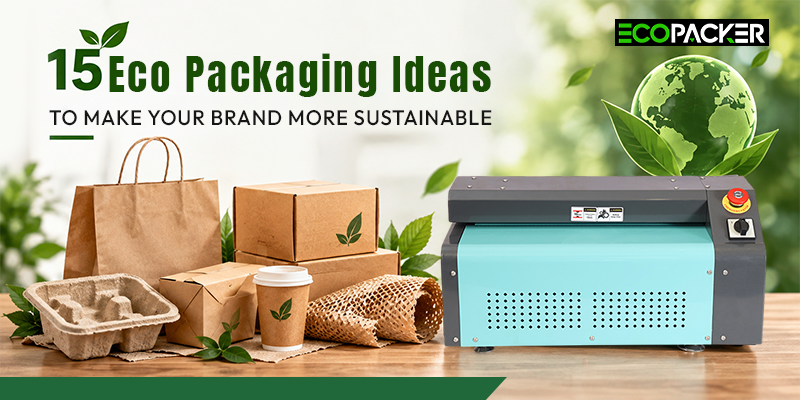
Modern-day consumers are focused on packaging more so than ever before and pay particular attention to the way products are packaged and not just the content of the package. Too much plastic, overly large boxes and unrecyclable packaging are sure to damage the reputation of the environmentally friendly brand, whereas effective packaging is going to reduce wastage and improve the consumer experience. The matter is not about substitution of one type of packaging for another, but about rethinking the whole chain of packaging from designing and manufacturing to transporting, using and disposing of. Practical Eco-Packaging Ideas is a chance for businesses to use their packaging resources effectively.
Why Sustainable Packaging Matters
Packaging helps protect the product but it can sometimes lead to unnecessary wastage of materials. In the case of responsible packaging, the entire process of the package from acquisition, manufacture through to its disposal or recycling is taken into account. Sustainable Packaging Ideas aim at reducing wastage of materials and use of appropriate resources.
Businesses can benefit through:
- Lower material consumption and packaging waste.
- Better alignment with customer expectations.
- More efficient storage and transportation.
- Stronger communication around responsible practices.
- Opportunities to reuse or recycle materials.
15 Practical Ideas for More Responsible Packaging
1. Use Recycled Paper and Cardboard
Recycled paper and cardboard can help lessen dependence on raw fibre if done responsibly. These are useful in making cartons, sleeves, inserts, mailers, and protective layers.
Companies also have other grades of recycled board based on the weight and protection needed for their products. In this way, they can avoid using excess materials.
2. Choose Right-Sized Boxes
A package much larger than the product needs extra material and creates unused space. Right-sizing reduces void fill and can allow more products to fit into each shipment, improving warehouse and transportation efficiency.
Before selecting a box size, businesses should measure their products and review the space required for protective materials. This simple change can improve both packaging efficiency and shipping utilization.
3. Replace Plastic Void Fill
Loose plastic fillings can usually be replaced by using paper cushioning, paper shreds, kraft paper, or molded fibre padding depending on the weight and vulnerability of the products being shipped.
Paper options will ensure cushioning as well as easy disposal when recycling of paper is common practice in the market.
4. Try Paper Cushioning Systems
Paper cushioning systems create protective structures around products while using recyclable paper as the feed material. They are useful for e-commerce and distribution operations where items need protection against movement and impact.
Businesses handling multiple product sizes can benefit from systems that create cushioning according to the requirements of individual packages. This can reduce the need to maintain several types of plastic protective materials.
5. Use Reusable Packaging for Repeat Deliveries
Reusability might be beneficial for subscription services, industrial transportation, and deliveries through local distribution channels. Reuse would be efficient if there is an effective system of return and enough delivery iterations that make it economical to clean packages.
Reusability is especially helpful in closed-loop supply chains in which containers travel repeatedly between suppliers, warehouses, and consumers.
6. Select Mono-Material Designs
Packages made primarily from one material are often easier to sort than complex structures made from several bonded materials. Before changing a design, confirm how the material is accepted by recycling facilities in target markets.
Reducing material combinations can also simplify purchasing, packaging operations, and disposal instructions.
7. Introduce Minimalist Packaging
Removing unnecessary sleeves, layers, decorative elements, or oversized components can reduce resource use.
Minimalist packaging does not mean sacrificing presentation. A clean design can still communicate brand identity through typography, labels, printing, and carefully selected structural features.
8. Review Printing and Coatings
Printing can influence a package’s environmental profile. Brands can review ink systems, coatings, finishes, and coverage levels with suppliers. Simpler artwork may also reduce production requirements.
Businesses should avoid adding finishes simply for appearance when they do not provide a practical benefit. Packaging should balance visual appeal with material efficiency.
9. Choose Recyclable Paper Tapes
Paper-based tapes can be considered where they provide sufficient sealing performance. Compatibility with cartons and recycling processes should be checked before adoption, particularly for heavy or moisture-sensitive shipments.
The tape should also provide enough adhesion for the product and transportation conditions. Testing is important before replacing existing sealing systems across an entire operation.
10. Add Clear Disposal Instructions
Even a recyclable product pack will end up as waste if the consumers are unaware about its disposal. Consumers can be educated regarding disposal through instructions provided.
The companies can provide small instructions for consumers telling them whether to recycle, reuse, segregate, or dispose of the packaging material parts.
11. Consider Compostable Materials Carefully
Biodegradable packaging will work well for certain purposes, but it will not be able to replace all conventional packaging types. Companies need to see if there is any industrial composting infrastructure available or if the material is approved for that particular purpose.
Biodegradable material may need special industrial composting conditions. Thus, it is important to analyze the infrastructure in a particular area first.
12. Use Renewable Materials Where Appropriate
Materials may also be produced out of agricultural fibers, molded pulp, or sustainably harvested paper. Companies must consider their source, production, longevity, transportation, and end-of-life disposal prior to choosing the material.
It is crucial that the aim is to choose materials based on the packaging system as a whole and not just one environmental feature.
13. Design Packaging for Reuse
A box, pouch, or container can have a second purpose after delivery. Strong construction and useful dimensions may encourage customers to store items or reuse the package for another shipment.
Businesses can make reuse more attractive by creating packaging that is easy to open without causing unnecessary damage. Reusable designs can also support stronger customer engagement.
14. Reduce Packaging Components
Review whether boxes, plastic wraps, inserts, and decorative pieces can be combined or eliminated. Fewer components can simplify assembly, reduce purchasing complexity, and make disposal easier.
A packaging audit can help identify components that provide little functional value. Removing them can improve operational efficiency while reducing material use.
15. Measure Packaging Performance
Sustainability improvements should be measured rather than assumed. Track material weight, package dimensions, damage rates, shipping efficiency, recycled content, and customer feedback.
Businesses can compare these measurements before and after introducing new packaging solutions. This helps identify whether a change genuinely improves performance.
How to Select the Right Packaging Strategy
Not every packaging solution suits every product. Food, electronics, cosmetics, industrial parts, clothing, and fragile goods have different protection and regulatory requirements.
When evaluating Sustainable Packaging Ideas, consider:
- Product weight, size, fragility, and moisture sensitivity.
- Transportation and storage conditions.
- Recycling or recovery infrastructure.
- Material availability and supplier consistency.
- Total cost, including packing labor and shipping.
- Customer convenience at disposal or reuse.
- Relevant packaging and product regulations.
A useful approach is to test one component at a time. Measure damage, material consumption, packing speed, and customer response before expanding the change.
How Technology Can Support Better Packaging
Packaging machinery can help businesses apply responsible designs consistently at higher volumes. Automated paper cushioning, paper conversion, perforation, and dispensing systems can reduce manual preparation and create protective packaging close to the packing station.
Green Packaging becomes more effective when technology improves efficiency without encouraging unnecessary material use. The objective should be to create a packaging process that is protective, measurable, efficient, and adaptable.
For growing businesses, machinery can also help standardize packaging operations. Consistent material feeding and conversion can improve workflow while reducing the time employees spend preparing protective packaging manually.
Building a Stronger Packaging Program
Start with a packaging audit, identify frequently used materials, and prioritize changes that can reduce waste without increasing product damage.
Businesses can build a practical program by:
- Auditing current packaging materials and quantities.
- Identifying unnecessary layers and oversized components.
- Testing lower-waste alternatives on selected products.
- Measuring cost, protection, and material reduction.
- Training packing teams on the new process.
- Reviewing performance regularly.
This gradual approach is often more practical than changing every packaging component at once. It allows businesses to understand the financial and operational impact of each improvement.
Why Brand Communication Matters
Explain how customers can dispose of or recycle the packaging. Highlight the steps being undertaken by the organization to ensure no unnecessary generation of waste occurs. Ensure you don’t make any unsubstantiated environmental claims.
The Good Green Packaging becomes part of the consumer experience when the packaging offers protection, proper labeling, good presentation, easy opening, and appropriate instructions for disposal.
Good communication eliminates misunderstandings. For example, if the packaging consists of several materials, consumers should know about the separation before recycling.
Conclusion
The process of responsible packaging does not mean that all businesses need to undergo a radical transformation. As for the best Eco Packaging Ideas, they often begin from basic modifications such as properly-sized boxes, recycling papers, fewer components, paper fillers, reusable containers and instructions about their disposal. The brands need to select the solution that is optimal considering product protection, price, materials availability and destination conditions.
If the firm wants to improve its packaging process using proper machinery and materials, then ecopacker could be a relevant choice to conduct this kind of research. A proper combination of design, materials, technology and measures will help organizations to eliminate the wastage without affecting customers.
FAQs
Right-sizing boxes and removing unnecessary layers are often simple starting points. These changes can reduce material use and shipping volume without requiring a complete redesign.
Not necessarily. Performance of the environment involves sourcing, weight, production, durability, transportation, and disposal. The correct packaging must protect the product using as few resources as possible.
Yes. Small businesses can begin with recycled cartons, paper tape, reduced void fill, reusable shipping materials, and right-sized boxes. A gradual approach makes testing and budgeting easier.
Businesses can compare packaging weight, dimensions, recycled content, waste generation, shipping efficiency, damage rates, and customer feedback before and after a change.
Eco-Friendly Packaging should employ efficiency in resource usage, simplicity, proper protection of the products inside, and realistic disposal. The evaluation of Eco-Friendly Packaging should be done throughout its entire life cycle rather than using just one feature of its material.
Eco-Friendly Packaging
Interested in the Eco-Packer Machine?
Fill out our inquiry form and our team will get back to you within 24 hours.
