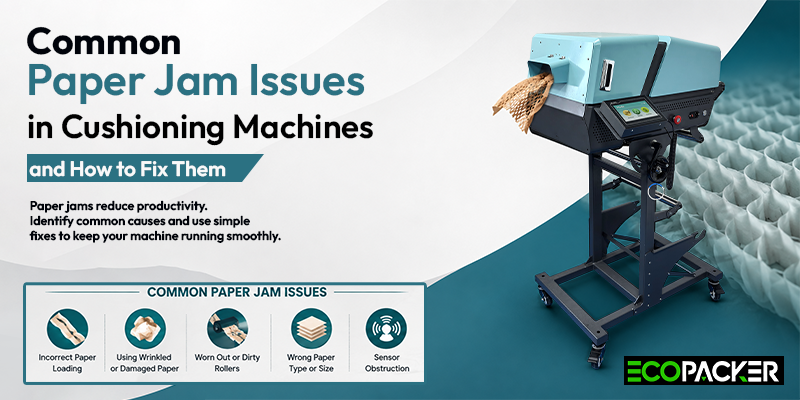
If you run a warehouse or an e-commerce packing unit, you already know how much your daily output depends on your equipment running smoothly. A paper cushioning machine is one of the most reliable tools for turning waste paper or kraft rolls into soft, protective padding for fragile items. But like any mechanical equipment, it can run into small operational hiccups and the most common one is a paper jam. A jam can slow down your packing line, waste material, and frustrate your staff. The good news is that most jams are easy to understand, easy to prevent, and easy to fix once you know what causes them. This article walks you through the real reasons paper jams happen, how to clear them safely, and how to stop them from happening again.
What Is a Paper Cushioning Machine?
Troubleshooting will be much easier when one understands how the machine operates. Paper cushioning equipment utilizes a roll of kraft or recycled paper, which is processed by rollers and crumpling/folding equipment. This results in turning flat paper into three-dimensional cushioning material, which can then be used to fill up spaces within boxes and provide protection to the items during transportation. It is widely used as an alternative to bubble wrap and foam because it uses recyclable paper instead of plastic. This machine normally has a feed roller, crumpling chamber, cutting device, and a control panel.
Key Features of a Paper Cushioning Machine
Understanding the parts of the machine makes it much easier to diagnose a jam. Most machines share these core components:
- Feed roller assembly – pulls paper from the roll into the machine at a controlled speed
- Tension control system – keeps the paper taut so it doesn’t fold incorrectly before processing
- Crumpling or folding chamber – shapes the flat paper into cushioning pads
- Cutting blade or perforation unit – trims the cushioning to the required length
- Control panel – lets operators set speed, length, and stop/start functions
- Paper roll holder – supports the raw material roll and allows it to unwind smoothly
Each of these parts plays a role in keeping paper flowing without interruption, and a fault in any one of them is usually the starting point of a jam.
Common Causes of Paper Jams
Paper jams rarely happen for just one reason. Here are the most frequent causes seen in daily operation:
- Incorrect paper loading – the roll is inserted at the wrong angle or the paper end is not fed straight into the rollers
- Worn or dirty rollers – dust, glue residue, or paper fibers build up over time and reduce grip
- Loose or excessive tension – paper that is too loose can fold unevenly; paper that is too tight can tear and get stuck
- Damaged or wrinkled paper roll – rolls stored in humid conditions or dropped during handling often develop creases that jam the feed path
- Blunt or misaligned cutting blade – a dull blade doesn’t cut cleanly, leaving torn edges that catch in the machine
- Overloaded speed settings – running the machine faster than the paper grade can handle increases the chance of tearing
- Foreign debris in the feed path – staples, tape, or dust from the surrounding area can obstruct movement
How to Fix a Paper Jam Step by Step
When a jam does occur, follow a calm, methodical approach rather than forcing the paper out, which can damage internal parts.
- Turn off and unplug the machine. Safety comes first before you open any panel.
- Open the access panel or roller housing. Most machines have a hinged cover for this exact purpose.
- Gently pull out the jammed paper in the direction of the feed path. Pulling against the natural direction can bend rollers or blades.
- Check the rollers for debris or residue and wipe them down with a dry or slightly damp cloth.
- Inspect the paper roll for tears, creases, or moisture damage before reloading it.
- Reload the paper carefully, making sure it feeds in straight and centered.
- Restart at a low speed to confirm the paper is moving smoothly before returning to normal operating speed.
Preventive Maintenance Tips
Prevention is always better than repeated troubleshooting. A few simple habits go a long way in keeping any paper cushioning machine running without interruption:
- Store paper rolls in a dry, covered area away from direct moisture
- Clean rollers and the cutting blade on a regular schedule
- Avoid mixing paper grades that the machine isn’t rated for
- Train operators to load rolls consistently and correctly
- Keep the surrounding work area free of dust, tape, and small debris
- Schedule periodic checks of tension settings and blade sharpness
Summary of Differences: Jam Causes vs. Their Fixes
When comparing the cause with the solution for each kind of jam, one can get a better idea of how to handle these problems. In order to solve a loading error, one needs to re-thread the paper. For roller jams, however, cleaning should be carried out more frequently, without having to change anything about the paper at all. The problem of improper tension can be solved by adjusting the dial according to the paper grade, while jams resulting from damage to the rolls require replacement of the roll itself, not the repairs to the machine. When jams occur due to blade problems, one needs to sharpen or replace the blade, and in cases when the issue concerns the machine’s speed, the only thing that needs to be done is matching the speed to the paper.
Conclusion
A paper jam is rarely a sign that your equipment is failing it is usually a small, fixable issue tied to loading, tension, cleanliness, or paper quality. By understanding how a paper cushioning machine works and following a consistent maintenance routine, businesses can reduce downtime significantly and keep their packing lines moving. Regular cleaning, correct roll storage, and operator training are the simplest ways to avoid repeated jams and get the most out of your machine over its working life.
If you’re looking to upgrade to reliable, well-built paper cushioning machines, Eco Packer offers a range of eco-friendly packaging equipment designed for smooth, low-maintenance operation. Explore their collection to find a machine that fits your warehouse or packing unit’s needs.
Frequently Asked Questions
1. Why does my cushioning machine jam so often?
Frequent jams are usually caused by a combination of factors rather than one single issue dirty rollers, incorrect paper loading, or worn cutting blades are the most common culprits. Humidity affecting the paper roll is another frequent cause, since damp paper tends to wrinkle and catch in the feed path. Checking rollers and storage conditions first usually resolves the majority of repeated jamming issues.
2. Can using the wrong paper grade cause jams?
Yes. Every cushioning machine is designed to work within a specific paper thickness and strength range. Paper that is too thin may tear under tension, while paper that is too thick may not fold correctly through the crumpling chamber. Always use the grade recommended for your specific machine model to avoid unnecessary jamming and wasted material.
3. How often should I clean the rollers to prevent jams?
Cleaning frequency depends on usage volume, but a general guideline is a light wipe-down weekly and a deeper clean monthly. High-volume operations running the machine for several hours daily may need more frequent cleaning since dust and paper fiber build up faster. Regular cleaning keeps grip consistent and reduces slippage that leads to jams.
4. Is it safe to pull jammed paper out forcefully?
No. Forcing paper out against the machine’s natural feed direction can bend rollers, damage the cutting blade, or misalign internal parts. Always switch off the machine first, then gently remove the paper in the direction it was originally feeding. If the jam doesn’t clear easily, open the access panel for a clearer view before attempting removal.
5. Do paper jams affect the quality of the cushioning produced?
Yes, indirectly. Frequent jams often leave torn or unevenly crumpled paper in the machine, which can affect the consistency of the cushioning pads produced afterward. It’s good practice to inspect the first few pads after clearing a jam to confirm the machine has returned to normal, even output before resuming full production.
Eco-Friendly Packaging
Interested in the Eco-Packer Machine?
Fill out our inquiry form and our team will get back to you within 24 hours.
