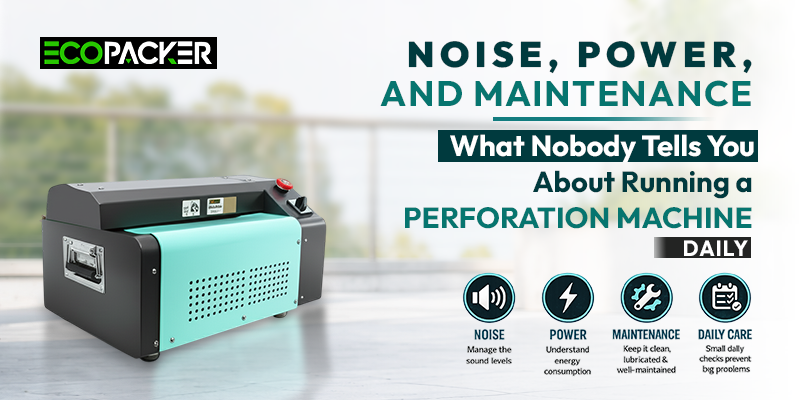
Every company looking to purchase an environment-friendly cardboard packaging machine knows all the features like production capacity, size, material saving, etc. The part that is usually overlooked in many publications is the day-to-day experience of operating such equipment – how noisy it is, what is the power consumption and maintenance that is really needed when it is part of your daily routine. With more Indian companies interested in alternatives to plastic packaging, it becomes important to learn about this side of things, apart from technical details. This article tries to give honest insight into the realities of working with a cardboard perforation machine, so you have a choice based on facts, not just promises. Sustainable packaging trends India 2026 require more companies to have their recycling facilities on site.
Key Features of a Cardboard Perforation Machine
Before getting into noise, power, and maintenance, it helps to understand what this equipment is generally built to do:
- Converts waste cardboard boxes into flexible, honeycomb-style cushioning material
- Works through precision rollers that perforate and stretch cardboard sheets
- Compact enough for a small warehouse corner or packing station
- Runs on standard household-type electrical power (220V in most Indian setups)
- Designed for continuous daily use rather than occasional operation
- Produces a soft, shock-absorbing material that can replace plastic void fillers
The above mentioned are the basic elements that make these machines relevant to sustainable packaging trends India 2026, yet the true litmus test is how well they perform when actually put into use everyday. Companies keeping track of sustainable packaging trends India 2026 are typically the ones raising these kinds of questions.
How Loud Is It, Really?
Noise is probably the biggest problem faced by people considering running any equipment within enclosed space. As perforation equipment is a machine, it does generate a working sound, similar to the sound of a printer or an industrial shredder rather than a disturbing sound. The sound is constant but is not loud enough to disturb an office located not too far away from the machine.
When dealing with smaller premises, it is advisable to install the machine away from calling and meeting stations. In case of a warehouse, however, the noise is quite easy to blend with the rest of the ambient noises generated during packing activities. If there is a concern about the noise level, there are ways to minimize the transmission.
Power Consumption : What It Actually Costs to Run
One of the positive aspects of possessing this type of machine is that it does not act in the way that heavy industrial equipment does in terms of electricity usage. Most perforation machines operate at 220V voltage, which is comparable to normal house/appliance equipment. Daily electricity usage depends on the number of hours the machine operates and the quantity of cardboard it processes; however, for normal small/medium packaging quantities, the amount of electricity consumed remains relatively low compared to using larger industrial machinery, such as conveyor belts or shredders.
When assessing the transition to sustainable packaging in India in 2026 as a seller, this is something to keep in mind: operating costs are generally not a key factor. Savings arise mostly from decreased expenses of plastic fillers, not electricity costs.
Daily Maintenance:What You Need to Do (and What You Don’t)
Most doubts and misunderstandings that first-time owners have are related to maintenance procedures. Every day, the key activity here is quite easy and includes removing the accumulated dust and debris on the rollers. It will take no more than a few minutes and will ensure that nothing is building up in the system.
Weekly or monthly checks can be made to see if the rollers are okay, if the feed area is clean, and if the machine is operating smoothly without vibration and changing sounds. Sudden changes in noise level and difficulty feeding the cardboard is the first warning sign, and you should pay close attention to it.
There are no serious consequences of neglecting maintenance immediately, yet, skipping this step will reduce the lifetime of your machine and the quality of the product. There is no need to hire any specialists for maintenance, and basic actions are sufficient here.
Summary of Differences: Traditional Packaging vs. In-House Perforation
| Factor | Traditional Plastic-Based Packaging | Cardboard Perforation Machine |
| Daily noise | Minimal, but sourcing/storage involves logistics noise | Low-to-moderate mechanical sound during operation |
| Ongoing cost driver | Repeated purchase of bubble wrap/foam | Small electricity cost + occasional upkeep |
| Maintenance need | None (consumable, not equipment) | Basic daily cleaning, periodic checks |
| Waste generated | Plastic waste, hard to recycle | Uses existing cardboard waste, reduces landfill load |
| Long-term fit | Recurring expense with no asset value | One-time equipment investment supporting in-house recycling |
This comparison reflects why more businesses are factoring equipment ownership into their packaging decisions rather than only comparing material costs.
Conclusion
Running a cardboard perforation machine day-to-day is manageable, but it does come with real, practical responsibilities – some noise, a modest and predictable power cost, and simple maintenance habits that keep it working well. None of these are dealbreakers, but they are worth knowing before making a decision, rather than discovering them after installation. As sustainable packaging trends India 2026 continue to push businesses toward plastic-free alternatives, understanding the honest, everyday experience of ownership helps sellers make a more informed and confident choice. For businesses that want to see this kind of equipment up close before deciding, EcoPacker offers a good starting point to explore how a cardboard perforation machine actually fits into daily warehouse operations.
Frequently Asked Questions
1. Is a cardboard perforation machine too loud for an office environment?
The machine makes constant sound like that of a printer or a small shredder and not an annoying one. Its placement in places far from areas where calls are received or held will be adequate to ensure there is no nuisance at all. In larger warehouses, it blends well with packing floor noises.
2. How much electricity does the machine use daily?
Most perforating machines require 220V of power, like any regular office appliance. The amount of electricity consumed by the machine depends on the duration and quantity of work performed by it, but it is not very high in comparison with the warehouse equipment.
3. Do I need a technician for regular maintenance?
Not really; routine maintenance can be easily handled by the regular staff members. Cleaning the machine of cardboard dust on a daily basis and checking rollers from time to time should be adequate. Professional maintenance is perhaps required only occasionally for more comprehensive mechanical inspections.
4. What happens if maintenance is ignored for a long time?
The machine may work all right, but lack of cleaning and checking would probably decrease its longevity and lower the standard of the punched cardboard produced. It is essential to follow certain maintenance routines in order to ensure stable performance over time.
5. Is this kind of machine relevant to current sustainable packaging trends in India?
Yes. With the shift away from single-use plastics to plastic fillers, recycling machinery such as perforation machines becomes highly relevant for sustainable packaging trends India 2026, allowing companies to decrease their reliance on plastic while utilizing their own cardboard waste for protective packaging purposes.
Eco-Friendly Packaging
Interested in the Eco-Packer Machine?
Fill out our inquiry form and our team will get back to you within 24 hours.
