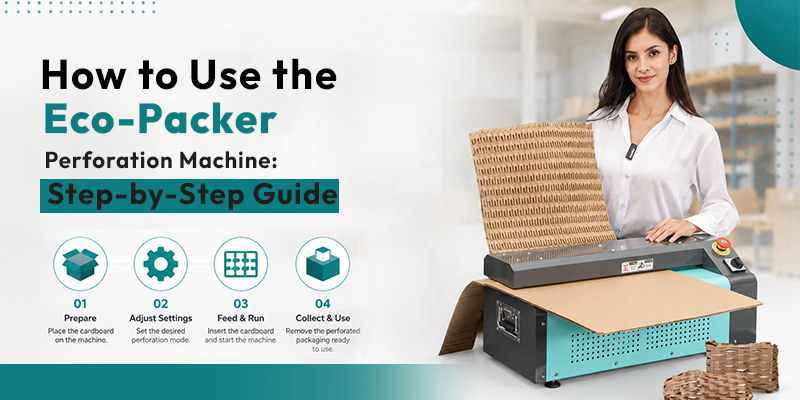
Packaging waste is a growing concern for warehouses, e-commerce sellers, and small businesses across India. Many companies still rely on plastic bubble wrap and foam sheets to protect fragile items, even though these materials are costly, non-biodegradable, and hard to dispose of. Equipment like the Eco-Packer Perforation Machine offers a practical alternative, converting waste cardboard into flexible, honeycomb-textured paper that works as protective cushioning. Instead of discarding used cartons, businesses can feed them back into the system to produce their own void fill and wrapping material on-site. This guide covers its features, setup, safe operation, and maintenance, and compares it with older packaging methods.
What Is the Eco-Packer Perforation Machine?
A paper perforation machine is a type of packaging machinery, which allows feeding sheets or rolls of kraft paper or cardboard between two rotating rollers containing perforation blades or pins. The material is thus cut in such a way that it can stretch and develop into a three-dimensional honeycomb shape. This expanded paper has certain cushioning qualities resembling those of bubble wrap. However, unlike plastic bubble wrap, it is made from eco-friendly paper.
As opposed to a simple cardboard shredder, which cuts the cardboard into strips, a perforation machine is responsible for creating a certain pattern of cutting. It is this cutting that provides shock-absorbing qualities for the resulting material.
Key Features
Here are the core features you can generally expect from a well-built system such as the Eco-Packer Perforation Machine:
- Compact and space-saving design — fits easily into a warehouse corner or small packaging station
- Energy-efficient operation — designed to run on standard power without heavy electricity consumption
- Low noise output — suitable for use in busy work areas without excessive disruption
- Steady processing capacity — most units handle roughly 40–60 kg of cardboard per hour, depending on the model
- Durable build quality — sturdy frame intended for regular, daily commercial use
- Simple feeder mechanism — allows waste cardboard to be inserted without complex setup
- Eco-friendly output — produces a fully paper-based cushioning material with no plastic involved
Setup: Getting Started
Setting up a void fill paper machine correctly the first time helps avoid problems later. General setup steps include:
- Choose a flat, stable surface near a power outlet and close to your cardboard waste collection point.
- Check the power supply matches the machine’s voltage requirement before plugging it in.
- Inspect the feeder and rollers for any packaging material or debris left over from transport.
- Do a test run with a small piece of cardboard to confirm the perforation pattern looks correct.
- Adjust the output collection area so the expanded paper has enough room to stretch out.
Step-by-Step Operation Guide
Once setup is complete, daily operation is fairly straightforward:
- Collect flat, clean cardboard waste — remove tape, staples, or plastic labels beforehand.
- Feed the cardboard into the machine’s intake slot, keeping edges aligned so it feeds evenly.
- Let the rollers pull the material through the perforating section automatically.
- Collect the perforated sheet as it comes out the other side.
- Stretch the sheet by hand to expand it into its honeycomb cushioning shape.
- Use the finished material to wrap items or fill empty space inside shipping boxes.
- Switch off the machine when not in use to save power and reduce wear.
This process turns what would otherwise be recycling waste into reusable, protective packaging material, which is the main advantage of using a sustainable packaging solution like this one.
Maintenance Tips
Regular upkeep keeps a packaging automation tool like this running smoothly for longer:
- Wipe down rollers and blades weekly to remove paper dust and small cardboard fragments
- Check for loose screws or bolts on the frame every few weeks
- Keep the machine in a dry area to prevent rust on metal parts
- Avoid feeding wet, torn, or heavily taped cardboard, as this can jam the rollers
- Schedule a periodic inspection of the cutting blades, since dull blades reduce perforation quality
Safety Tips
Since this equipment involves moving rollers and cutting components, basic safety habits matter:
- Keep hands and loose clothing away from the feeder opening while it is running
- Turn off and unplug the machine before doing any cleaning or maintenance
- Do not feed metal objects, plastic, or wet material into the machine
- Keep the work area clear of clutter to avoid trips near moving parts
- Make sure only trained staff operate the machine in a warehouse packaging setup
Differences: Perforation Machine vs. Other Packaging Methods
It helps to understand how this equipment compares with commonly used alternatives:
| Method | Material Used | Eco-Friendly? | Reusability | Best For |
| Bubble wrap | Plastic | No | Single-use | Light cushioning |
| Foam sheets | Plastic-based foam | No | Single-use | Fragile item padding |
| Basic cardboard shredder | Cardboard | Yes | Loose fill only | General void filling |
| Paper perforation machine | Recycled cardboard | Yes | Reusable output | Structured cushioning for fragile goods |
The key difference is that a shredder simply shreds cardboard into strips with limited cushioning ability, while a perforation-based system creates a honeycomb structure that stretches and absorbs shock more effectively, similar in function to plastic bubble wrap but fully paper-based.
Who Can Benefit From This Machine?
This kind of equipment is commonly used by:
- E-commerce sellers shipping fragile products like electronics or glassware
- Warehouses looking to reduce dependency on plastic packaging materials
- Small businesses aiming to lower their monthly packaging supply costs
- Companies working toward sustainability and waste-reduction goals
Conclusion
The Eco-Packer Perforation Machine, like other paper perforation systems, offers a practical way to turn cardboard waste into usable, protective packaging without relying on plastic. By understanding the setup, operation, maintenance, and safety steps outlined above, businesses can make an informed decision about whether this kind of equipment fits their packaging needs. For more details on eco-friendly packaging equipment, you can visit ecopacker.co.in.
Frequently Asked Questions
1. What is the main purpose of the Eco-Packer Perforation Machine?
Its main purpose is to convert waste cardboard into a flexible, honeycomb-textured paper that can be used as protective cushioning for shipping fragile items. This reduces the need for plastic packaging materials like bubble wrap or foam, while also giving businesses a practical way to reuse their own cardboard waste instead of discarding it.
2. How is it different from a regular cardboard shredder?
The normal shredder only slices the cardboard into small strips; however, these strips provide little protection. A perforating method works in such a way that cuts a certain pattern on the cardboard such that it stretches to form three dimensions. This makes it a better shock absorber.
3. What kind of cardboard works best for this process?
Flat, clean, dry cardboard without heavy tape, staples, or plastic coating works best. Wet or torn cardboard can jam the feeder and reduce the quality of the perforated output. It is a good practice to sort and flatten cardboard boxes before feeding them into the machine for smoother, more consistent processing.
4. Is this type of machine noisy to operate?
Most compact packaging units in this category are designed with noise reduction in mind, so they can run in a shared workspace without being overly disruptive. However, actual noise levels can vary by model and usage pattern, so checking the specifications of a particular unit before use is recommended.
5. How often does this machine need maintenance?
Light maintenance, such as wiping down rollers and checking for debris, is generally recommended on a weekly basis. A more detailed inspection of blades, bolts, and moving parts every few weeks helps prevent jams and keeps the perforation quality consistent, extending the overall working life of the machine.
Eco-Friendly Packaging
Interested in the Eco-Packer Machine?
Fill out our inquiry form and our team will get back to you within 24 hours.
