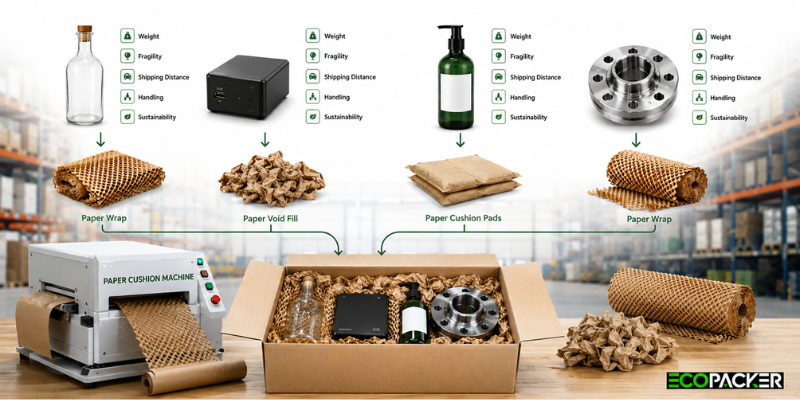
Cushioning of products is an important aspect in warehouse management since it will determine the level of safety, customer satisfaction, and logistic expenses. Each product has different cushioning requirements based on its dimensions, weight, fragility, form, storage, and transportation process. The use of wrong protective materials may result in the damage of products, return of the goods, and inefficiency of the entire packaging process. In order to solve the above problem, the warehouse makes use of a systematic decision-making process that analyzes some issues including handling risks, shipping modes, sustainable goals, and efficiency among others in the selection of the best cushioning solution. The use of materials such as recyclable papers, void fillers, and the Paper Cushion Machine are some of the examples that can be used to ensure adequate cushioning for each product.
Understanding the Product’s Physical Characteristics
Understanding the product itself is the first component of the decision process. Before deciding on cushioning solutions, warehouses categorize items based on their physical characteristics.
Products that are lighter in nature, including cosmetics, accessories for clothing, and accessories for electronics, usually require a different type of protection from industrial equipment.
Fragile products need more shock absorption than durable products that might require simply void filling in order to avoid movement within the box.
The shape of the product is very important, especially when dealing with irregularly shaped products.
Key Factors Warehouses Consider When Selecting Cushioning Materials
- Product weight and dimensions
- Fragility and impact resistance
- Transportation distance and handling conditions
- Environmental sustainability requirements
- Packaging speed and warehouse efficiency
- Customer expectations for eco-friendly packaging
- Storage space availability
- Total packaging costs and material utilization
Evaluating Shipping and Handling Risks
Transportation conditions directly influence cushioning decisions. Products that travel across multiple distribution centers experience more handling points, increasing the risk of impacts and vibrations.
Warehouses assess several factors, including:
Transportation Distance
Long-distance shipments usually require stronger protective packaging because products remain in transit for extended periods and encounter varying environmental conditions.
Number of Handling Touchpoints
The more times a package changes hands, the greater the chance of accidental drops or impacts. Products moving through complex supply chains often receive additional internal protection.
Shipping Method
Air freight, road transport, and sea shipping each create different stress conditions. Cushioning materials must match the transportation environment to maintain product integrity.
Determining the Required Type of Protection
Different products require different forms of cushioning. Warehouses generally classify protection needs into several categories.
Void Filling
Void filling prevents products from shifting within the shipping carton. Paper-based materials, recyclable fillers, and protective wraps are commonly used to stabilize products during transportation.
Wrapping Protection
Wrapping creates a protective layer around the product itself. This method is useful for preventing scratches, surface damage, and minor impacts.
Blocking and Bracing
Heavy products require blocking and bracing techniques to secure items firmly inside the package. This approach minimizes movement and reduces stress on the packaging structure.
Cushioning Against Impact
Fragile products require specialized cushioning systems that absorb external shocks. Automated solutions produced by a Cushioning are increasingly used to create protective paper pads that distribute impact forces effectively.
Sustainability Considerations in Modern Warehouses
Environmental responsibility has become a major factor in packaging decisions. Many companies are opting to replace plastic materials with recyclable and renewable ones.
Paper cushioning systems, recycled packaging materials, and biodegradable packaging options are some methods used by businesses to become more environmentally friendly while satisfying the requirements of their consumers.
Material efficiency is considered by warehouses through:
- Recyclability after use
- Renewable resource availability
- Waste reduction opportunities
- Carbon footprint implications
- Storage and transportation efficiency
These considerations support broader corporate sustainability initiatives without compromising product protection.
The Role of Automation in Paper Cushion Machine Selection
Automation has revolutionized the process of packaging in warehouses. Modern packaging machines have facilitated companies to manufacture packaging material whenever needed without having stocks of pre-manufactured packaging material.
The Paper Cushion Machine helps the operator to prepare the customized length of cushioning material according to packaging needs.
Cost Versus Protection: Finding the Right Balance
Effective packaging decisions involve balancing protection requirements with operational costs. The most expensive cushioning option is not always the best choice, nor is the cheapest solution necessarily sufficient.
Warehouses typically evaluate:
Product Value
High-value products justify stronger protective measures because replacement costs are significantly higher.
Damage Risk
Products with greater susceptibility to damage require additional investment in protective packaging solutions.
Return and Replacement Costs
Customer returns, reverse logistics, and product replacements often exceed the initial cost of proper cushioning materials.
By considering these factors, businesses can optimize their packaging investments while maintaining customer satisfaction.
Using Data to Improve Paper Cushion Machine Decisions
Modern warehouses increasingly rely on data-driven approaches to refine packaging strategies. Historical shipping records, damage reports, and customer feedback provide valuable insights into packaging performance.
Important metrics include:
- Damage rates during transit
- Packaging material consumption
- Customer satisfaction levels
- Return percentages
- Shipping cost efficiency
Continuous monitoring helps organizations adjust cushioning methods and improve long-term packaging outcomes.
Paper-Based Cushioning Systems in Warehouse Operations
Paper cushioning has gained popularity because it combines product protection with environmental benefits. Automated paper conversion systems create protective pads, wraps, and void-fill materials directly at the packing station.
Businesses using a Cushioning Machine can produce packaging materials according to real-time requirements, reducing unnecessary waste and improving warehouse productivity.
Related packaging technologies include:
- Paper void fill systems
- Kraft paper packaging solutions
- Sustainable protective packaging equipment
- Eco-friendly cushioning materials
- Automated paper conversion systems
These solutions support both operational efficiency and sustainability objectives across modern supply chains.
Training Employees on Packaging Decision Frameworks
Even the best packaging systems require knowledgeable employees. Warehouses invest in training programs that teach workers how to evaluate products and select appropriate cushioning methods.
Training typically covers:
- Product classification techniques
- Risk assessment procedures
- Material selection guidelines
- Sustainable packaging practices
- Equipment operation standards
Proper training ensures consistent packaging quality and reduces human error throughout warehouse operations.
Finding a Reliable Paper Cushion Machine Supplier
When choosing packaging equipment, businesses should look for suppliers that offer durable machines, reliable technical support, and solutions that match their operational requirements. Companies seeking sustainable packaging options often compare factors such as machine efficiency, ease of use, paper compatibility, maintenance requirements, and after-sales service before making a decision. For those exploring paper-based protective packaging systems in India, EcoPacker provides information on various eco-friendly packaging solutions, including paper cushioning and void-fill technologies. Readers can learn more by visiting EcoPacker and evaluating the options that best fit their warehouse and shipping needs.
conclusion
Choosing the proper cushioning is an intelligent strategy that requires the analysis of certain factors regarding the properties of the products, transport risks, sustainability objectives, efficiency, and overall packaging cost. Contemporary logistics companies apply structured decision-making in order to make sure that the product will be safely transported while ensuring sustainability and customer satisfaction.
The increasing usage of automated systems like Paper Cushion Machine demonstrates the change of the packaging industry towards flexible, sustainable, and efficient protective packaging systems. Through the integration of analysis of data, education of employees, and sustainable materials, it is possible to design efficient and sustainable packaging systems.
Frequently Asked Questions
1. How do warehouses decide which cushioning material to use?
Warehouses select cushioning materials by evaluating factors such as product weight, size, fragility, shape, shipping distance, and handling conditions. They also consider sustainability goals, packaging costs, and customer expectations. The objective is to provide enough protection to prevent damage during storage and transportation while maintaining operational efficiency and minimizing material waste. Modern warehouses often use data and standardized packaging guidelines to make consistent and effective cushioning decisions.
2. What is the purpose of a Paper Cushion Machine?
A Paper Cushion Machine is designed to convert kraft paper into protective cushioning materials used for void filling, wrapping, and impact absorption during shipping. It helps warehouses create packaging materials on demand, reducing storage requirements and minimizing waste. These machines also support sustainable packaging practices by replacing plastic-based alternatives with recyclable paper solutions, making them a practical choice for modern logistics and e-commerce operations.
3. Why are paper-based cushioning systems becoming more popular?
Paper-based cushioning systems are becoming more popular because they offer an environmentally responsible alternative to traditional plastic packaging materials. They are recyclable, made from renewable resources, and help businesses reduce packaging waste while meeting growing consumer demand for sustainable practices. In addition to their environmental benefits, paper cushioning provides effective product protection, supports packaging automation, and can be customized for different product sizes and shipping requirements across various industries.
4. What factors increase the need for stronger cushioning?
Several factors can increase the need for stronger cushioning, including product fragility, heavy weight, irregular shapes, long shipping distances, and frequent handling during transit. High-value or sensitive items also require additional protection to minimize the risk of damage, returns, and customer dissatisfaction. Warehouses assess these conditions carefully to choose cushioning materials that provide adequate shock absorption, stability, and protection throughout storage, transportation, and final delivery.
5. How does packaging automation improve warehouse efficiency?
Packaging automation improves warehouse efficiency by increasing packing speed, reducing manual labor, and ensuring consistent packaging quality across all shipments. Automated systems can produce protective materials on demand, minimize material waste, and optimize the use of storage space. They also help standardize packaging processes, reduce human error, and support higher order volumes, enabling warehouses to improve productivity while maintaining product protection and operational cost efficiency.
Eco-Friendly Packaging
Interested in the Eco-Packer Machine?
Fill out our inquiry form and our team will get back to you within 24 hours.
