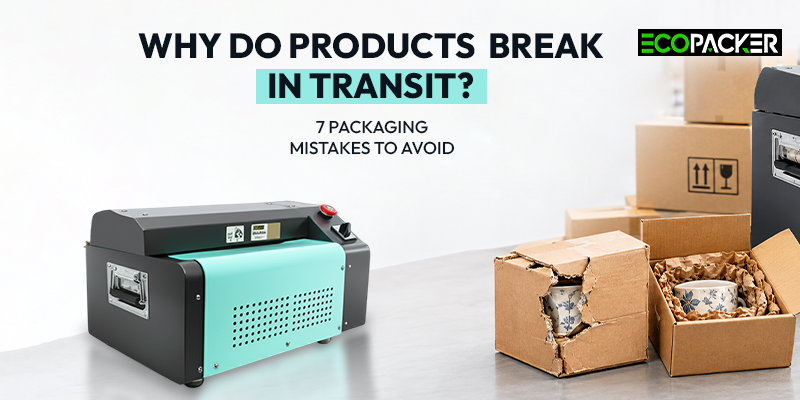
Few things are more annoying than getting an item that was ordered previously but arrived broken. This situation is almost always unpleasant for the buyer, who has to wait for a refund. The seller, however, has to deal with a complaint and a return of the item, which entails new packaging and shipping costs and damages the seller’s reputation. Most importantly, almost all of these situations could have been avoided.
The product has to go through several stages before it reaches the customer. It has to be lifted, lowered, thrown, pushed on a conveyor belt or into a truck, and several other procedures. Therefore, strong packaging is necessary for the product to hold its shape during transit. Many sellers forget that there are also small details when putting the item in the box.
Today, many businesses are also moving away from plastic bubble wrap and foam. They use recycled cardboard that has been perforated into a cushioning layer. An eco packer machine is one tool that helps convert waste cardboard into this kind of protective material. In this blog, we explain why products break in transit and the 7 packaging mistakes to avoid.
Why Do Products Break During Shipping?
Before looking at the mistakes, it helps to understand the forces that damage a parcel on its journey.
Shock and drops: Parcels are often dropped or thrown during handling. A sudden impact can crack glass, bend metal, or break electronic parts.
Vibration: Trucks, trains, and planes shake continuously. Over hours or days, this vibration can loosen screws, scratch surfaces, and damage delicate items.
Compression: Heavy parcels are stacked on top of lighter ones. A weak box collapses under this pressure and crushes the product inside.
Moisture and temperature: Rain, humidity, and heat can weaken cardboard and damage products such as food, medicine, and electronics.
Good packaging must handle all four of these risks. Now let us look at the mistakes that leave products unprotected.
Mistake 1: Using a Weak or Wrong-Sized Box
The outer box is the first line of defense, and many sellers use old boxes, which often turn out to be damp, torn, or weak. In addition, the size is equally important – a small box will damage the contents due to pressure, and a wide box will allow the contents to slip and shift. However, the right solution in this case is to choose a more robust box – for example, double-wall corrugated cardboard. If the goods are heavy or fragile, the height and width of the box should be selected with a five- to seven-centimeter difference from the product’s dimensions.
Mistake 2: Using Too Little Cushioning
Many sellers wrap the item in a single layer of newspaper or tin and throw it in the box. This is completely wrong. Cushioning serves to absorb impact, reducing the force of the blow against the product.
It’s important to cushion all six sides of the product, the top, bottom, and four sides. The corners and edges are where most items get damaged. A good rule of thumb is to leave at least 1/2 inch of clearance on all sides, top, and bottom. If you can move it around in the box by shaking it gently, it isn’t well enough cushioned.
Mistake 3: Leaving Empty Space Inside the Box
Empty space or void is one of the main causes of transit damage. It occurs due to the formation of space around the item being shipped, thus allowing it to gain momentum and energy before impacting against a surface directly. A properly wrapped item is not immune to such damage.
Loose fillers such as crumpled paper or even packing peanuts have the tendency to compact together and create a new set of gaps in transit. Instead, it is advised to use a structured filler material. Using cardboard perforated into hexagonal shapes as a filler, using a cardboard perforator machine, creates a strong filler material that will resist deformation and prevent product damage due to gaps in packaging.
Mistake 4: Ignoring the Weight and Fragility of the Product
Not all products require the same kind of packing materials. A glass bottle, a ceramic cup, a laptop, and a pair of shoes – all these goods have different weight and vulnerable spots. Using the same packing method for all items is an inevitable mistake that many companies make.
Heavy products should be packed using stronger cardboard boxes and additional filler materials such as foam. Delicate items like glass packaging require extra protection layers and special attention. In case of sending several goods in one box, each product should be banded apart from each other with filler materials to prevent breaking. Pay special attention to the weakest spot of the product and protect it with additional materials.
Mistake 5: Poor Sealing and Weak Tape
A box can split if it is not closed properly. Inadequate or cheap tapes can split under the pressure of moist air or during transit. The box closed in the middle will split at the ends.
Therefore, use good packing tape and make sure to apply it in the shape of an “H”. By doing so, you will ensure that the seams in the middle of the box and on either end are well sealed. We need to apply the tape to the desired end of the box, holding it with our finger, and firmly adhere it to the surface of the box. A good seal is achieved only when the tape is pressed hard enough to stick to the box surface. Do not use masking tape, cello tape, or any other ordinary tape for closing boxes during shipment since they cannot withstand the pressure of transit.
Mistake 6: Skipping Packaging Tests
Many sellers do not perform a simple test of the packaging before sending items to customers. They usually find out about the packaging issues by the complaints of the buyers. A simple test can fix the problem.
Before packing the item, try to shake and tilt the item. Drop the prepared package from a height of about 1 meter on the floor and check if there are no damages. Open the package and check if the product is defective, deformed, or misplaced. If the product is defective, improve the packaging and repeat the trial until you are confident that the product is safe.
Mistake 7: Overlooking Sustainable Cushioning Options
Many sellers use only plastic bubble wrap and foam packaging as these are the materials they are accustomed to using. However, while being protective of the goods, such packaging leads to plastic waste since more and more customers are shifting towards plastic-free product packaging.
An innovative alternative to plastic bubble wrap and foam is recycled paper cushioning that is lightweight, easily disposed of, and can be produced from cardboard waste. A cardboard perforating machine, also known as an eco packer machine, can cut and stretch cardboard scraps into a cellular honeycomb structure that can be formed into sheets. The sheets can then be wrapped around items being shipped or used as a filler. In this way, cardboard core packaging allows for reducing, reusing, and recycling cardboard, as well as presenting an eco-friendly image of the company.
Key Features of Good Protective Packaging
Whether you choose paper-based or another type of cushioning, good protective packaging should have these qualities:
- Shock absorption: It softens the force of drops and bumps.
- Void filling: It leaves no empty gaps where the product can move.
- Compression strength: It holds its shape when parcels are stacked.
- Light weight: It does not add much to shipping weight.
- Easy to use: Packing staff can apply it quickly without special skills.
- Eco-friendliness: It is recyclable or made from recycled material.
- Cost control: It reduces repeat purchases of packing supplies and lowers loss from damaged goods.
- Compact setup: The equipment or material is easy to store in a small warehouse. A compact eco packer machine, for example, suits small sellers who have limited space.
Differences: Poor Packaging vs Good Packaging
The main difference between a poorly packed and well-packed item is planning and materials. The first can be characterized by weak boxes, single-layer wrapping, and loose packing, while the second uses a reliable cardboard box, multi-layer wrapping, and special fillers. The first type should also be held with low-quality tape, while the second is taped with a thick tape in the right pattern. They also differ with tests and preparation, as the second type is always subjected to testing before shipping.
They also have different consequences, as the poorly packed items are doomed to return as they shift upon impact and cause damage to the product. At the same time, with the second type, the fillers simply absorb the blow, and the item remains at the same spot inside the box. One of the crucial differences between the two types is the materials, as the first type uses plastic, while the second uses either paper or cardboard. The second option is better for the environment, while the first is more wasteful. It also depends on what exactly is being shipped, how much it is, and who will be able to receive it.
Conclusion
Products break in transit mainly because of weak boxes, thin cushioning, empty space, poor sealing, and a lack of testing. Each of these mistakes is easy to fix once you know about it. Strong boxes, full cushioning, tight sealing, and simple drop tests can cut damage sharply and keep customers happy.
If you want to reduce plastic use at the same time, turning waste cardboard into cushioning is a smart step. An eco packer machine makes this possible for businesses of different sizes. Start by reviewing your current packing method, fix one mistake at a time, and watch your damage rates fall.
Frequently Asked Questions (FAQs)
1. What is the most common reason products break in transit?
The most common reason is poor cushioning combined with empty space inside the box. When a product can move freely, it hits the box walls during drops and vibration. Using the right box size, wrapping every side, and filling all gaps with firm, structured material greatly reduces this risk.
2. How much space should I leave around a product for cushioning?
A gap of about 5 to 7 cm on all sides is a good general rule for fragile items. This space should be filled with cushioning, not left empty. Very heavy or delicate products may need more. Always test the packed box by shaking it gently to check that nothing moves.
3. Is perforated cardboard as protective as bubble wrap?
Perforated cardboard forms a honeycomb pattern that absorbs shock and fills gaps well, making it a useful alternative for many products. Its performance depends on the item’s weight and fragility. Always test your own packaging with a sample before switching, especially for very delicate or heavy products.
4. How does an eco packer machine help reduce shipping damage?
An eco packer machine converts waste cardboard into a flexible, perforated cushioning layer. This layer wraps around products and fills empty space, which keeps items steady during transit. It also lets businesses reuse cardboard they already have, supporting plastic-free packaging while still giving reliable protection for fragile goods.
5. How can I test whether my packaging is strong enough?
Pack a sample exactly as you would for a customer. Shake it, tilt it, and drop it from about one metre onto different sides and corners. Open the box and inspect the product for scratches, cracks, or movement. If you find damage, improve the cushioning or box strength and test again.
