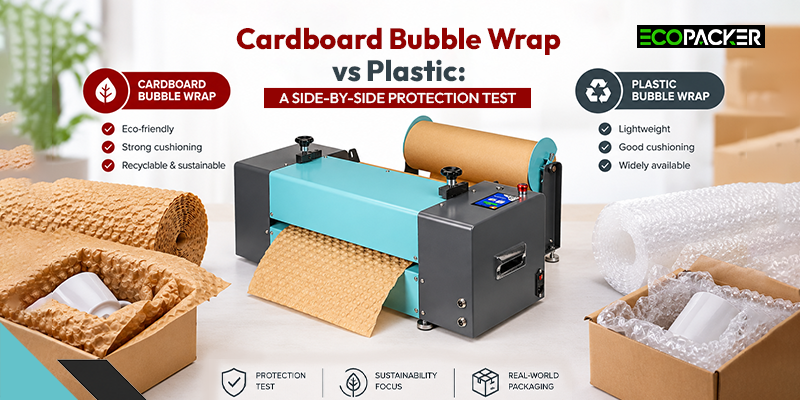
Every product that leaves a warehouse is exposed to the same risks of falling, knocking, pressure and moisture. For decades the best solution has been plastic bubble wrap. It is light, commonly known and easy to find. The market for bubble wrap is undeniably shifting, as shoppers and governments around the world grow more and more concerned about waste. As a result, there is an urgent need to find a bubble wrap alternative that will continue to keep goods safe.
As a result there has been a growing interest in using a different material to provide cushioning to goods. Cardboard or paper based materials offer a viable solution that can be recycled in many areas with regular paper recycling. They are light and can cushion a variety of products, but do they offer the same level of protection as plastic based bubble wrap? In this article we will test both materials in a controlled environment and present our findings to you in an accessible and easy to follow manner. We will use straightforward language and ensure our recommendations are actionable at all levels of production.
Key Features of Cardboard and Paper Cushioning
- Made from paper fibre: Usually produced from kraft paper or corrugated cardboard, which come from a renewable raw material.
- Recyclable in most paper streams: Clean paper cushioning can generally go with household paper recycling, though local rules differ.
- Good shock absorption: Crimped, folded or honeycomb paper structures spread impact across a larger area.
- Strong against compression: Corrugated and honeycomb designs hold their shape under the weight of stacked boxes.
- Void fill and wrapping in one: The same material can wrap an item or fill empty space inside a carton.
- No static or plastic residue: Paper does not cling to products or leave film on surfaces.
- Better look for unboxing: Natural brown or grey paper looks clean and gives a responsible brand impression.
- Can be made on demand: Paper cushioning machines convert flat rolls into padding at the packing table, which saves storage space.
What Is Plastic Bubble Wrap?
Plastic bubble wrap is a flexible film made from polyethylene with a texture of pockets of air inside. The pockets act as cushions that absorb the shocks during the transportation of a package. The film also provides an additional feature of being smooth to prevent damage to fragile objects and surfaces.
The main advantages of plastic bubble wrap include being light, resistant to water, having multiple sizes of bubbles, and good insulating properties. However, the disadvantages are also evident, such as the possibility of bursting under pressure or after prolonged storage. Moreover, bubble wrap is single-use, and many curbside recycling programs do not accept it for recycling, and it takes much space during transportation due to the trapped air pockets.
What Is Cardboard or Paper Bubble Wrap?
Cardboard bubble wrap is a catch-all name for paper-based padding that emulate the function of plastic bubbles, but without the plastic. The products can take several forms. Some are corrugated cardboard cores wrapped in a wavy layer designed to cushion contents, others are crinkled or embossed kraft papers that create a soft mesh. One final version is a form of honeycomb paper which opens up into a cellular structure which traps air in pockets to create a pad-like material.
It is the design of the structure rather than pockets of air that allow it to cushion effectively. The folding and bending of the material is able to absorb impact by deforming slowly and resistively. Because the material is flat when stored, it can be stored using far less space. By being based on a structure, it can avoid the risk of deflation or popping. It also has the benefit of being easily cut or torn by hand to allow faster packing.
Why Look for a Bubble Wrap Alternative?
There are four main reasons people start searching for a bubble wrap alternative today.
1. Environmental concern. Plastic film is hard to collect and process. Paper has a much more established recycling system, so it is more likely to be reused.
2. Customer expectations. Many buyers are unhappy when they open a parcel full of plastic. Paper padding supports a greener brand image.
3. Regulations. Governments and large marketplaces are encouraging or requiring less plastic in packaging, so switching early avoids future problems.
4. Storage and logistics. Paper rolls and flat sheets are compact before use. Pre-inflated plastic is bulky and costs more to store and move.
None of these reasons matter if the product arrives broken, so protection must always come first. That is why a proper test is the best way to compare materials.
How to Run a Side-by-Side Protection Test
You do not need a laboratory to compare cushioning. A simple test at your packing table gives useful answers. Use the same item, the same box and the same packing effort for each material.
Step 1: Pick a test item. Choose something typical for your business, such as a glass jar, a ceramic mug or a small electronic device. Use a low-value or dummy item.
Step 2: Pack identically. Wrap each item with the same number of layers and fill the same empty space. Seal the boxes the same way.
Step 3: Drop from set heights. Drop each box from the same height, such as waist height, onto a hard floor. Try flat, edge and corner drops. Repeat several times for fair results.
Step 4: Compress and shake. Place a moderate weight on top of the box for a period of time, then shake it. This copies stacking and vibration in transit.
Step 5: Check for damage. Inspect the item, the surface finish and the padding itself. Note whether the padding kept its shape.
Note that results depend on item weight, shape and packing quality. Treat this as a guide for your own products rather than a universal rule.
What the Comparison Usually Shows
Shock absorption. Plastic bubbles perform very well for light items because the air cushion is soft. Paper cushioning with a corrugated or honeycomb structure performs strongly for medium and heavier items, since it resists crushing and keeps spacing around the product. For very small, delicate parts, thick layers of either material are needed.
Surface protection. Plastic film is smooth and rarely marks glossy surfaces. Paper is also gentle, but very rough or recycled grades can leave tiny fibres on high-polish products. A thin inner wrap solves this.
Compression strength. Bubbles can flatten or burst when heavy cartons sit on top for days. Corrugated and honeycomb paper hold their shape better under steady weight.
Moisture. Plastic repels water. Paper can weaken if it gets wet, so products that travel through humid or rainy conditions need a sealed inner bag or a water-resistant outer carton.
Weight. Plastic is lighter. Paper adds slightly more weight, which can matter for very large shipments, though the difference per parcel is small.
Void fill. Paper crumples and locks into gaps, which stops items from sliding. Plastic bubble sheets can leave gaps unless they are balled or folded carefully.
Environmental Impact: A Fair Look
Paper is not perfect, and honest comparison matters. Making paper uses energy and water, and forests must be managed responsibly. Look for materials from certified sources or with recycled content. On the other hand, plastic film is made from fossil-based resin and can persist in the environment for a very long time if it escapes into waste streams.
The biggest difference is end of life. Clean paper cushioning can go into paper recycling in many regions, and it breaks down naturally if it ends up in compost. Plastic bubble wrap is technically recyclable at special drop-off points in some countries, but it is rarely collected from homes. Reuse helps both materials, so keep good padding for your next shipment whenever possible.
Handling, Storage and Packing Speed
Paper cushioning comes flat or on rolls, taking up much less space than inflated plastic. Many packers like the convenience of cutting and folding, rather than using tape, although some formats require a small amount of tape to keep the wrapping secure. Plastic is faster to wrap, and its use is more intuitive, requiring less training of new staff. Whatever the materials, always test procedures on a trial week basis so that your staff aren’t tied down by completely new working practices.
Best Uses for Each Material
Choose plastic bubble wrap when you ship very light, delicate items in wet conditions and need minimum weight. Choose paper or cardboard cushioning when you ship glassware, ceramics, home décor, bottles, cosmetics, books and electronics accessories and want a recyclable solution. For many sellers, a good bubble wrap alternative is a mix: paper as the main cushion and void filler, with a small inner wrap for fragile surfaces.
Some extra tips for safe packing with paper:
- Use a strong outer carton with room for at least two to three centimetres of padding on every side.
- Wrap each item individually so pieces never touch each other.
- Fill all gaps so nothing can move when the box is shaken.
- Mark the box clearly as fragile, but never rely on labels alone.
Summary of Differences
| Factor | Plastic Bubble Wrap | Cardboard / Paper Cushioning |
|---|---|---|
| Material | Polyethylene film with air pockets | Kraft paper, corrugated cardboard or honeycomb paper |
| Shock absorption | Very good for light items | Very good for medium and heavy items |
| Compression strength | Bubbles may flatten or pop | Holds shape well under weight |
| Moisture resistance | High | Low unless sealed or coated |
| Weight | Very light | Slightly heavier |
| Storage space | Bulky when inflated | Compact, flat or rolled |
| Recycling | Limited kerbside collection | Widely accepted in paper recycling |
| Void filling | Needs careful folding | Crumples and locks into gaps |
| Brand image | Seen as less eco-friendly | Seen as natural and responsible |
Frequently Asked Questions
1. What is the best bubble wrap alternative for fragile items?
For fragile items, corrugated paper wrapping and honeycomb paper are suitable materials. They help to absorb the blow and keep a space between the object and the box walls. In addition, it is possible to wrap each single item separately, add another layer of paper for glassware and ceramics, and fill all empty spaces to hold objects not moving. It is also critical to make a test pack with several drops before shipping a full order.
2. Is cardboard bubble wrap as strong as plastic?
In most cases, yes. Plastic is appropriate for light goods, but corrugated, and especially honeycomb paper, is more resistant to pressure and stacking. It all depends on the thickness and the number of layers, as well as the goods to be delivered. Very heavy or pointed products will need a very thick and strong paper to hold them and resist pressure.
3. Can paper cushioning be recycled?
Clean, dry paper cushioning can usually be recycled with other paper and cardboard. Remove plastic tape, labels or staples first, because they can reduce recycling quality. Rules differ by city and country, so check local guidance. Paper that is greasy or very wet may be better suited for composting or general waste.
4. Does paper padding work for wet or humid conditions?
Paper loses strength when it becomes soaked, so it needs extra care in wet weather. Place products in a sealed inner bag, use a water-resistant outer carton, or add a moisture barrier. For short trips in normal conditions, standard paper cushioning performs well. For long sea transport, add proper moisture protection.
5. How much padding should I use in a box?
Aim for at least two to three centimetres of cushioning around every side of the product, and more for heavy or very delicate items. The item should not touch the box walls. After packing, shake the sealed box gently. If you feel or hear movement, add more padding until the contents stay firmly in place.
Conclusion
Plastic bubble wrap is still valuable for some packaging purposes, such as packing light items and protecting them from getting wet. However, paper or cardboard cushioning materials have proved to be a viable alternative for the majority of regular packing needs. They can protect items from impacts and mechanical damage, store easily in a rolled state and are often recyclable. Testing different variants with regards to the specific products and using the appropriate thicknesses, along with additional moisture protection measures where required, will enable choosing the best possible option for the given application. By doing so, it will be possible to provide sufficient protection for the products, meet the demands of the customers, and reduce the usage of plastic materials. Thus, for companies wishing to reduce their environmental impact, opting for an alternative to plastic bubble wrap seems to be a viable solution.
If you are searching for reliable eco-friendly packaging materials, you can explore the range at Ecopacker, where paper-based cushioning options are available for different product needs.
Eco-Friendly Packaging
Interested in the Eco-Packer Machine?
Fill out our inquiry form and our team will get back to you within 24 hours.
