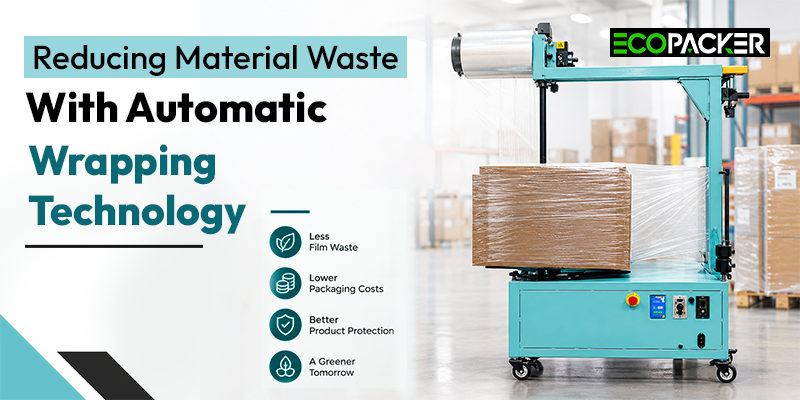
Packaging waste has become one of the most pressing operational and environmental challenges for manufacturers across India. As production volumes grow and consumer demand shifts toward sustainability, businesses are under increasing pressure to rethink how products are wrapped, sealed, and shipped. This is exactly where automatic wrapping technology is proving to be a game changer, helping companies cut down on excess film, paper, and plastic while keeping production lines fast and efficient.
In this blog, we’ll explore how automatic wrapping technology works, why it outperforms manual and semi-automatic methods when it comes to waste reduction, and what businesses should look for when adopting this technology on their production floor.
The Growing Problem of Packaging Waste
Factories in many fields add up to large amounts of packaging trash each year. This shows up in food plants, pharma lines, shops that ship consumer items, and online order centers. A lot of the mess does not come from the goods themselves. It comes from how the goods get wrapped. Film may be used in uneven amounts. People may apply it wrong. Some teams wrap extra layers because they do not want complaints. Others run machines that are not set to the exact size of each product.
Manual wrapping is a big part of the issue. Many workers choose a thicker layer than they truly need. The goal is a safe hold, but the result is more film than required. Over time, that adds cost. It also increases waste. When this happens across many thousands of units each day, the impact grows quickly. The bill grows, and the environment takes the hit too.
Because of this, many manufacturers are shifting to automatic wrapping systems. These setups reduce the random parts of the work. They help keep the wrap more even from item to item.
What Is Automatic Wrapping Technology?
Automatic wrapping technology is made for machines that cover, seal, or bundle items. They run with set programmes, sensor checks, and precise controls. In most cases, a person does not need to step in often. The goal is simple. Wrap the product the right way without constant manual handling.
These machines figure out what amount of film or paper is needed. They use the item’s size, shape, and weight. Then they apply only what is needed to keep the product secure during handling and transport.
With manual wrapping, results can vary. An automatic unit aims to stay steady. It keeps tension the same from one run to the next. It also cuts the material in a repeatable way. Each item that goes through the line gets wrapped with the same basic settings, so the later units match the early ones.
Many modern systems also plug into bigger production setups. They work with conveyor belts and sensor inputs. Some also connect to packaging software. This helps the whole process run in one flow, from the start of wrapping to the next packaging step.
How Automatic Wrapping Technology Reduces Material Waste
1. Precision Measurement and Cutting
Automatic wrapping has a key benefit: it can handle wrapping material with tight precision. The system measures the product and then trims film or paper to match. A person does not have to guess or estimate. The machine uses sensors to read the dimensions and it only uses what is needed. Because of that, it often cuts down material use versus hand wrapping.
2. Elimination of Human Error
A second gain is fewer mistakes from people. Packaging waste often starts with small human slip ups. Someone might pull extra film, place an item slightly off center, or fail to keep pace during fast production. That can lead to items being thrown out or redone. With an automatic unit, those changes do not happen in the same way. After setup and calibration, the equipment repeats the same steps with steady accuracy. Each run stays consistent, so rework drops and less material goes to waste.
3. Optimised Film and Paper Usage
Many automatic wrapping machines today are designed with waste-reduction features built directly into their engineering, such as end-fold styles that use less material, adjustable tension settings, and smart sensors that detect gaps or misfeeds before they cause a wrapping error. This kind of intelligent automated packaging solution is specifically engineered to minimise excess material use without compromising product protection.
4. Consistency at Scale
When production ramps up, manual work can drift. That drift can cause uneven results.
Wrapping by hand also changes from shift to shift. With automatic wrapping, the results hold up better as output rises. More runs mean the machine settles into the same pattern each time.
For companies that ship a lot, this helps. Small slowdowns or errors add up. The extra material waste can grow fast when volume stays high.
5. Reduced Product Damage and Rejections
If items are wrapped the wrong way, they can get hurt while they are shipped or stored. That often means returns, extra repacking, and more waste. When wrapping is done by machines, it puts the same pressure on each item and seals it in a steady way. Coverage is more even too. As a result, the products hold up better from the start. That helps cut down the extra trash that shows up when damaged items need to be packed again or thrown out.
Automatic Wrapping Technology vs. Traditional Methods
When comparing automatic wrapping technology to manual or semi-automatic wrapping, the difference in efficiency and waste output becomes clear:
- Manual wrapping relies heavily on individual worker technique, leading to inconsistent material usage and higher error rates.
- Semi-automatic wrapping machines improve speed but still require manual loading, positioning, or adjustment, which leaves room for inconsistency.
- Fully automatic wrapping machines integrate sensors, programmable settings, and precision cutting to standardise the entire wrapping process from start to finish.
For businesses serious about packaging waste reduction, moving from manual or semi-automatic setups to a fully automated system is often the single most impactful operational change they can make.
Environmental and Business Benefits
The environmental case for automatic wrapping technology is straightforward: less material used means less waste sent to landfills, lower raw material extraction, and a smaller overall carbon footprint. But the business case is equally compelling:
- Lower material costs: Using only the required amount of film or paper directly reduces raw material spend.
- Improved sustainability credentials: Brands increasingly need to show measurable progress on material waste reduction to meet both regulatory requirements and consumer expectations.
- Higher throughput: Automated systems wrap products faster and more consistently than manual labour, improving overall line efficiency.
- Lower labour dependency: Reducing reliance on manual wrapping frees up workers for higher-value tasks elsewhere in the facility.
Together, these benefits make automatic wrapping technology not just an environmental upgrade but a genuine competitive advantage.
What to Look for When Choosing an Automatic Wrapping Machine
If you’re evaluating options for your own production line, here are a few factors worth prioritising:
- Material efficiency features — Look for machines specifically designed to minimise film or paper consumption, such as end-fold wrapping styles or adjustable tension control.
- Compatibility with your product range — Ensure the automatic wrapping machine can handle the size, weight, and shape variability of your products without requiring excessive downtime for reconfiguration.
- Integration capabilities — The best systems work as part of a larger automated packaging solution, syncing with conveyors, sensors, and downstream equipment like cartoners or sealers.
- Energy efficiency—Many modern machines are built with energy-saving motors, which reduces both operational costs and environmental impact.
- Ease of maintenance — A well-designed automatic wrapping machine should be easy to clean, recalibrate, and maintain, minimising unplanned downtime.
Choosing the right machine isn’t just about speed; it’s about finding a system that aligns with your specific waste-reduction and sustainability goals.
The Future of Packaging Is Automated and Sustainable
More and more industries are feeling pressure to lower their impact on the environment. In that climate, automatic wrapping is turning into the norm. It is no longer treated like something extra.
Companies that start using it early can lower expenses. They can also respond to what buyers want now. Rules are also tightening, and many people expect less waste from packaging.
Before, wrapping was often done by hand. That could be slow and not always the same from one run to the next. With newer machines, the process becomes steady and measured. This is a simple move for a maker who wants less packaging waste. It can still keep speed high, maintain output, and protect items during shipping.
Conclusion
Cutting down on wasted materials does not need to slow down output. This post shows that better efficiency and less waste can work together when the right approach is used. With automated wrapping tools, companies can use less extra packing material. At the same time, they get steadier results and better protection for items during handling.
If you run a business in India and want to update your packaging line, Ecopacker can help. The company provides automatic wrapping machines and other automated packaging options. These tools are built to support both smooth operations and lower impact on the environment. Food sites, online order fulfilment centres, and manufacturing plants can all benefit. Choosing automatic wrapping with Ecopacker can reduce waste, help control spending, and support a more sustainable way to package products.
