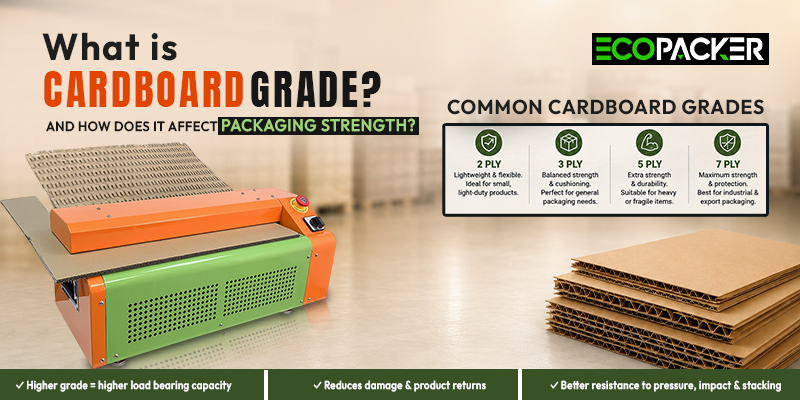
If you have ever picked up two boxes of the same size and noticed that one feels stiff and sturdy while the other feels thin and flimsy, you have already experienced the difference that cardboard grade makes. Cardboard is not one single material. It comes in many grades, thicknesses, and constructions, and each one is built for a different job. Some grades are made for light items like shoes or greeting cards, while others are engineered to carry heavy machine parts across the country without collapsing.
Understanding cardboard grade helps you choose the right box for the right product, avoid damage during shipping, and reduce unnecessary packaging waste. In this article, we will break down what cardboard grade actually means, how it is measured, the different flute types used in corrugated board, and how all of this affects overall packaging strength. By the end, you will be able to look at a box and understand exactly why it is built the way it is.
What Does Cardboard Grade Mean?
Cardboard grade refers to the classification of cardboard based on its thickness, number of layers, material composition, and strength rating. It tells you how much weight a box can hold, how well it resists crushing, and how it will perform during handling, stacking, and transport.
Grade is usually decided by a few technical factors:
- Paper weight (GSM): Grams per square metre of the paper used in each layer. Higher GSM generally means a stronger, heavier board.
- Number of plies: Single wall, double wall, or triple wall board, referring to how many layers of fluting and liner are combined.
- Edge Crush Test (ECT): Measures how much pressure the edge of the board can withstand before it crushes, which is directly linked to stacking strength.
- Burst Strength Test: Measures how much pressure the flat surface of the board can take before it bursts.
- Box Compression Test (BCT): Measures how much weight a finished box can support when stacked.
These tests together determine the final cardboard grade, which manufacturers use to match packaging to the product it needs to protect.
Types of Cardboard You Should Know
Not all cardboard is corrugated. There are actually a few broad categories, and knowing them helps you pick correctly.
- Paperboard (Chipboard): A single, non-corrugated layer used for cereal boxes, shoe boxes, and product packaging that does not need heavy strength.
- Corrugated Cardboard: Made of a fluted inner layer sandwiched between two flat liners, offering much higher strength and cushioning.
- Single Face Board: One flat liner glued to one fluted layer, mainly used for wrapping and protective padding.
- Single Wall Board: One fluted layer between two liners, the most common type for regular shipping boxes.
- Double Wall Board: Two fluted layers and three liners, used for heavier or fragile items.
- Triple Wall Board: Three fluted layers, built for industrial-grade, very heavy shipments.
Cardboard Flute Types Explained
The flute is the wavy, corrugated layer inside the cardboard that gives it strength and cushioning. Different flute types change the thickness, crush resistance, and printing surface of the board.
- A Flute: The thickest and oldest flute type, offering excellent stacking strength and cushioning, commonly used for fragile or heavy goods.
- B Flute: Thinner than A flute, with strong crush resistance, often used for canned goods and point-of-sale packaging.
- C Flute: A middle-ground flute offering a balance of strength and stacking ability, widely used for general shipping boxes.
- E Flute: Thin and smooth, ideal for retail boxes where a clean printing surface matters, such as cosmetic or food packaging.
- F Flute: Very thin, used for small, lightweight retail boxes that still need a premium look.
Combining flutes, such as BC flute or EB flute in double wall board, increases both strength and versatility, which is why many heavy-duty shipping boxes use combined flute structures.
How Cardboard Grade Affects Packaging Strength
Cardboard directly decides how a box behaves under real-world conditions such as stacking in a warehouse, vibration during transport, humidity, and repeated handling. A higher grade generally means:
- Better stacking strength, so boxes lower in a pallet do not collapse under the weight above them.
- Improved cushioning, protecting fragile items from shocks and drops.
- Higher resistance to moisture and humidity, especially in treated or multi-ply boards.
- Longer shelf life for packaged goods, since the box maintains its shape during storage.
- Lower risk of damage claims, which matters for businesses shipping products regularly.
On the other hand, choosing a grade that is too strong for a lightweight product simply adds unnecessary material cost and environmental impact, while choosing one that is too weak risks product damage and returns. The goal is always to match the grade to the actual weight, fragility, and shipping distance of the product inside.
Differences
| Feature | Paperboard | Single Wall | Double Wall | Triple Wall |
| Layers | 1 | 3 (1 flute + 2 liners) | 5 (2 flutes + 3 liners) | 7 (3 flutes + 4 liners) |
| Strength | Low | Medium | High | Very High |
| Common Use | Retail boxes, cereal boxes | E-commerce shipping | Heavy or fragile goods | Industrial, export cargo |
| Cost | Lowest | Moderate | Higher | Highest |
This comparison makes it easier to see why cardboard grade is not just a technical term but a practical decision that affects cost, protection, and sustainability at the same time.
Conclusion
Cardboard grade is the foundation of good packaging. It determines how well a box protects its contents, how efficiently it stacks, and how it holds up through the journey from warehouse to doorstep. By understanding flute types, ply structure, and strength testing methods like ECT and BCT, businesses and individuals can make smarter packaging choices that reduce damage, control costs, and support more sustainable material use. Whether you are packing a single gift or shipping thousands of units, knowing your grade means knowing exactly what protection you are getting.
Frequently Asked Questions
1. What is the difference between single wall and double wall cardboard?
Single wall cardboard has one fluted layer between two liners, making it lightweight and suitable for everyday items. Double wall cardboard has two fluted layers with three liners, offering greater strength for heavier products, export shipments, and situations where boxes are stacked for long periods during storage or transport.
2. Which flute type is best for shipping boxes?
C flute is widely considered ideal for general shipping because it balances stacking strength with a good printing surface. However, the best choice depends on product weight, fragility, and distance traveled, so heavier items may need B flute or double wall board for added protection.
3. How is cardboard packaging strength actually measured?
Cardboard strength is measured using tests like the Edge Crush Test, which checks stacking resistance, the Burst Strength Test, which checks puncture resistance, and the Flat Crush Test, which checks how well flutes resist flattening under pressure during handling and storage.
4. Does a higher grade of cardboard always mean better packaging?
Not necessarily. A higher grade means more strength, but using it for light items adds unnecessary material and shipping weight. The goal is matching the correct grade to the product’s actual requirements rather than always choosing the thickest or strongest option available.
5. Can the type of cardboard used affect protection against moisture?
Yes, to some extent. Higher grade boards with quality linerboard and proper wall construction offer better resistance to humidity and minor moisture exposure. However, for serious moisture protection, additional coatings or liners are usually required alongside choosing the right base material.
Eco-Friendly Packaging
Interested in the Eco-Packer Machine?
Fill out our inquiry form and our team will get back to you within 24 hours.
